Home Curriculum Framework Smart Science IoT Kit
Lesson Plans

Smart Science IoT Kit

A complete 8-lesson curriculum journey — ready to deliver in your classroom with full lesson plans, coding programs, and standards alignment.

8 Lessons
Grades 5–8
NGSS · CSTA Aligned
5 Downloads per Lesson
1
Lesson 1
Air Quality Monitoring
45–90 minGrades 5–8IoT + STEAMmicro:bitAir Quality Sensors
Lesson Overview

Students build an air quality monitoring device using the Smart Science IoT Kit and micro:bit, investigating how sensors detect airborne pollutants and particulate matter. Through real-world data collection, students explore the impact of air quality on human health and the environment, programming their device to display readings and trigger alerts when pollution thresholds are exceeded.
Build an air quality monitoring device using the Smart Science IoT Kit and micro:bit sensors
Explain how air quality sensors detect pollutants and convert measurements into digital data
Analyse real-time air quality data and identify patterns linked to health and environmental impact
Program the micro:bit to display air quality readings and trigger threshold-based alerts
Connect IoT sensor technology to real-world applications in environmental science and public health
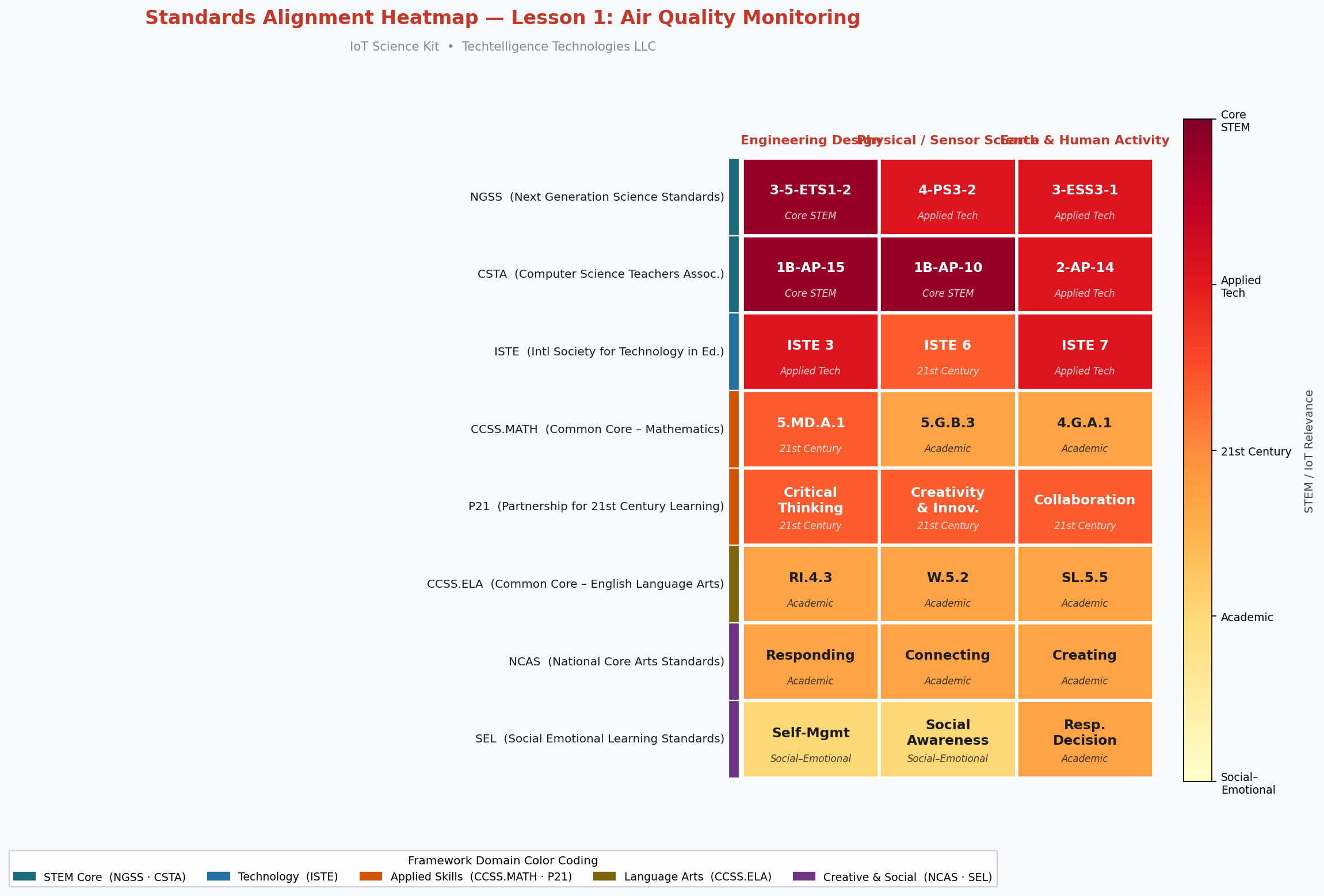
Standards Alignment Heatmap
Standards Alignment Heatmap — Lesson 1: Air Quality Monitoring
2
Lesson 2
Environmental Noise Detection
45–90 minGrades 5–8IoT + STEAMmicro:bitSound & Decibel Sensing
Lesson Overview

Students build a noise detection device using the Smart Science IoT Kit and micro:bit, exploring how sound waves are measured in decibels and how noise pollution affects human health and wildlife. Through data collection and threshold programming, students design a smart alert system that responds to dangerous noise levels — connecting sound physics to real-world IoT applications.
Build an environmental noise detection device using the Smart Science IoT Kit and micro:bit
Explain how sound sensors work and how decibel levels are used to measure noise intensity
Investigate the impact of noise pollution on human health and ecosystems using collected data
Program the micro:bit to monitor sound levels and trigger visual or audio alerts above set thresholds
Apply IoT thinking to propose real-world noise monitoring solutions for schools, cities, or nature reserves
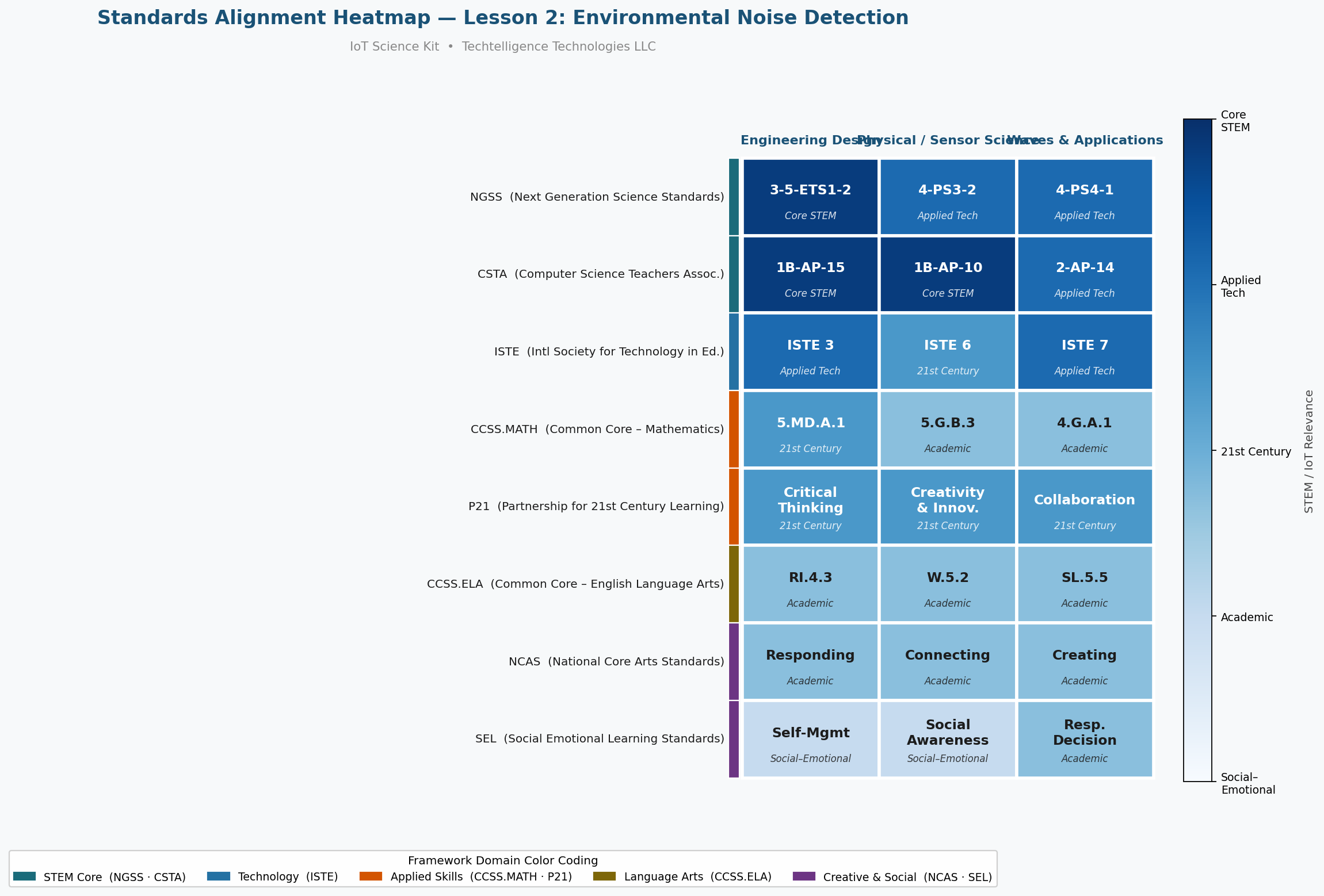
Standards Alignment Heatmap
Standards Alignment Heatmap — Lesson 2: Environmental Noise Detection
3
Lesson 3
Environmental Monitoring Station
45–90 minGrades 5–8IoT + STEAMmicro:bitMulti-Sensor Integration
Lesson Overview

Students design and build a multi-sensor environmental monitoring station using the Smart Science IoT Kit and micro:bit, integrating temperature, humidity, and light sensors into a single data-collecting system. Through this project, students explore how IoT networks gather and transmit environmental data, programming their station to log readings and generate actionable insights about local environmental conditions.
Build a multi-sensor environmental monitoring station integrating temperature, humidity, and light sensors
Explain how IoT systems collect, process, and transmit environmental data across connected devices
Analyse multi-variable sensor data to identify environmental patterns and anomalies
Program the micro:bit to log readings from multiple sensors and display summarised environmental status
Evaluate how environmental monitoring stations contribute to climate science, agriculture, and smart city planning
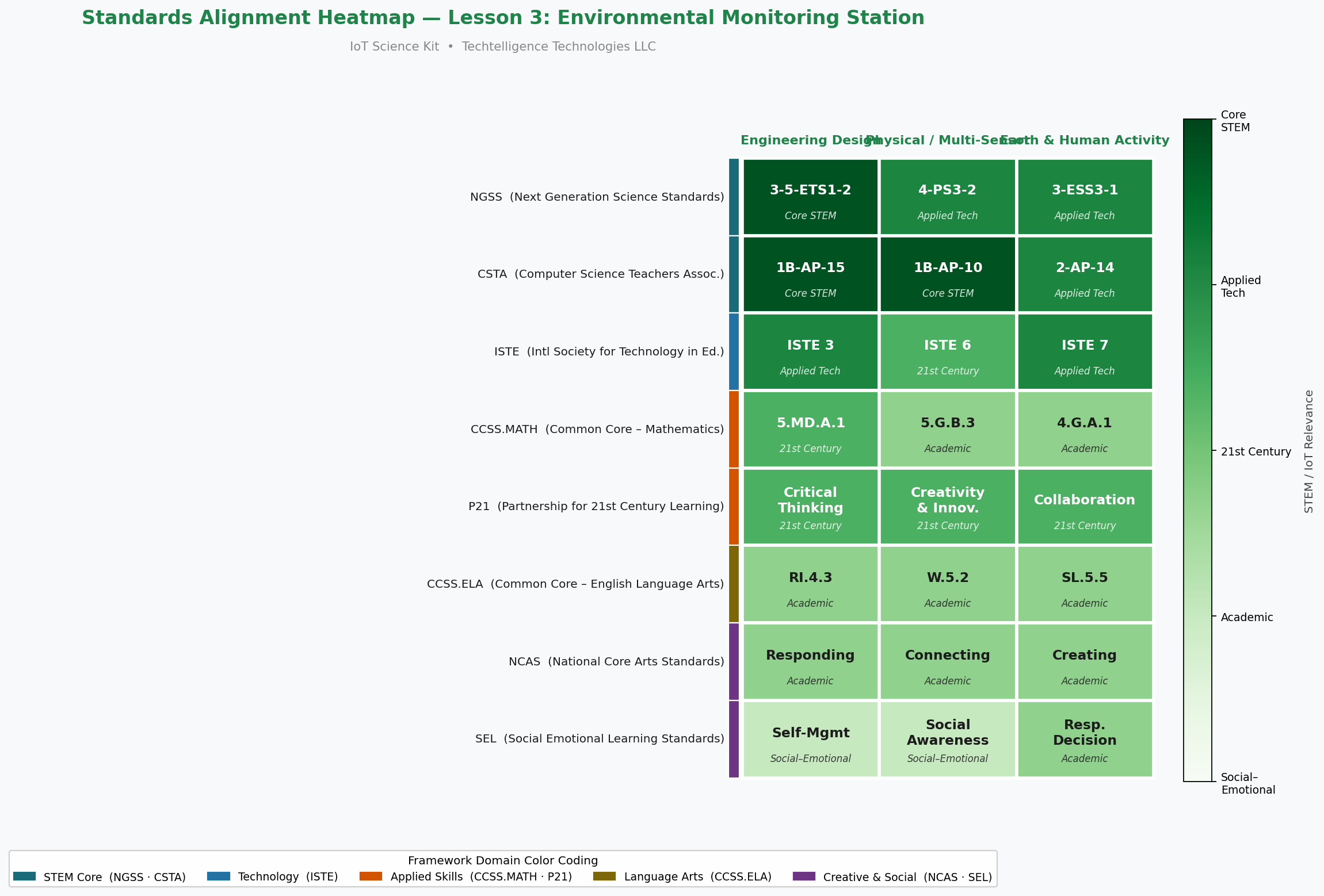
Standards Alignment Heatmap
Standards Alignment Heatmap — Lesson 3: Environmental Monitoring Station
4
Lesson 4
Smart Irrigation System
45–90 minGrades 5–8IoT + STEAMmicro:bitSoil Moisture & Automation
Lesson Overview

Students design and build a smart irrigation system using the Smart Science IoT Kit and micro:bit, using soil moisture sensors to automate plant watering decisions. Through this project, students explore precision agriculture, water conservation, and feedback-loop automation — programming their system to activate watering only when moisture drops below a set threshold and connecting IoT design to real-world food security challenges.
Build a smart irrigation system that uses soil moisture sensors to automate watering decisions
Explain how feedback loops in IoT systems enable automated, data-driven responses to environmental conditions
Investigate the relationship between soil moisture levels, plant health, and water use efficiency
Program the micro:bit to read moisture data and trigger irrigation actions based on programmable thresholds
Connect smart agriculture technology to global water conservation and food security challenges
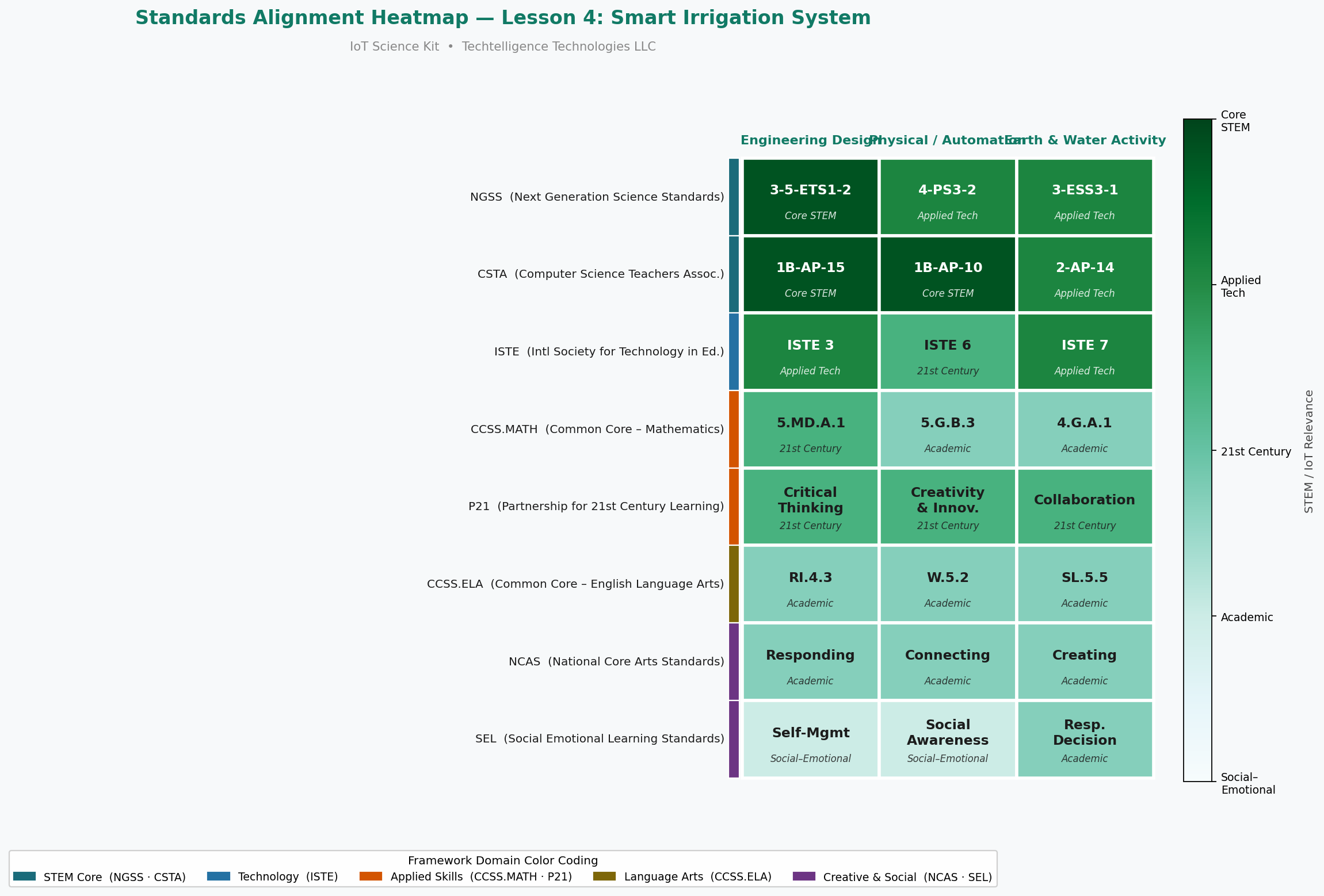
Standards Alignment Heatmap
Standards Alignment Heatmap — Lesson 4: Smart Irrigation System
5
Lesson 5
Self-Defense Monitoring Station
45–90 minGrades 5–8IoT + STEAMmicro:bitMotion & Proximity Sensing
Lesson Overview

Students build a self-defense monitoring station using the Smart Science IoT Kit and micro:bit, integrating motion and proximity sensors to detect intrusion and trigger alert responses. Through this project, students explore how IoT security systems work, programming their device to activate alarms and LED indicators when movement is detected within a defined zone — connecting sensor logic to real-world smart security applications.
Build a motion-activated security monitoring station using proximity and motion sensors with the micro:bit
Explain how motion and proximity sensors detect physical presence and translate it into digital signals
Investigate how IoT security systems use sensor networks to monitor and protect defined zones
Program the micro:bit to detect motion events and trigger alert responses — sound, light, or wireless notification
Evaluate ethical considerations in IoT surveillance design and propose responsible use frameworks
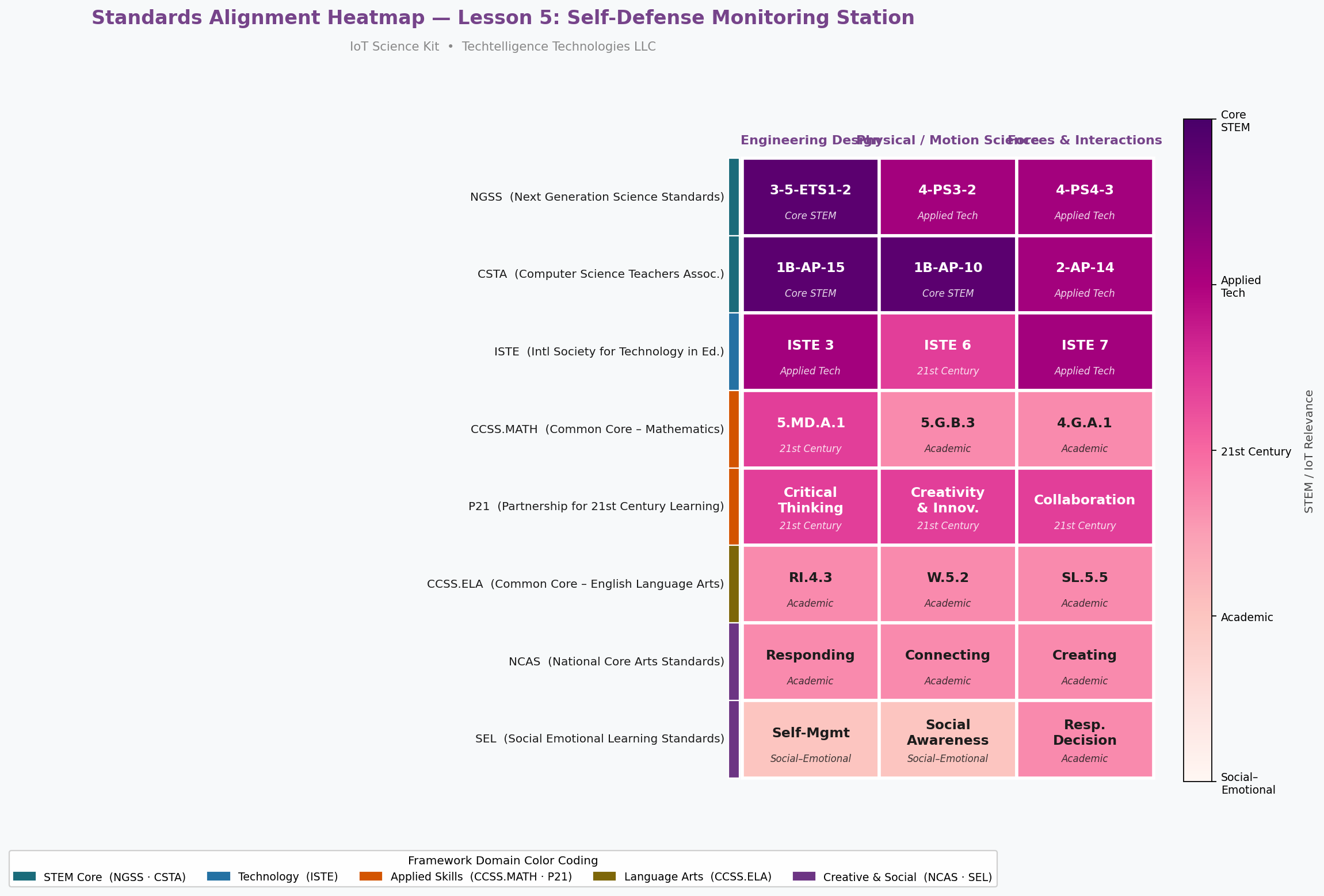
Standards Alignment Heatmap
Standards Alignment Heatmap — Lesson 5: Self-Defense Monitoring Station
6
Lesson 6
Lesson Title — Coming Soon
45 minGrades 5–8NGSS
Lesson Overview

Lesson overview and briefing will be added here. This section will describe the lesson objectives, context, and what students will explore and build during this session.

Learning objective 1 — to be filled in
Learning objective 2 — to be filled in
Learning objective 3 — to be filled in
7
Lesson 7
Lesson Title — Coming Soon
45 minGrades 5–8NGSS
Lesson Overview

Lesson overview and briefing will be added here. This section will describe the lesson objectives, context, and what students will explore and build during this session.

Learning objective 1 — to be filled in
Learning objective 2 — to be filled in
Learning objective 3 — to be filled in
8
Lesson 8
Lesson Title — Coming Soon
45 minGrades 5–8NGSS
Lesson Overview

Lesson overview and briefing will be added here. This section will describe the lesson objectives, context, and what students will explore and build during this session.

Learning objective 1 — to be filled in
Learning objective 2 — to be filled in
Learning objective 3 — to be filled in
Product Details

Smart Science IoT Kit

Explore the full product page — kit contents, technical specifications, compatible platforms, and ordering information.