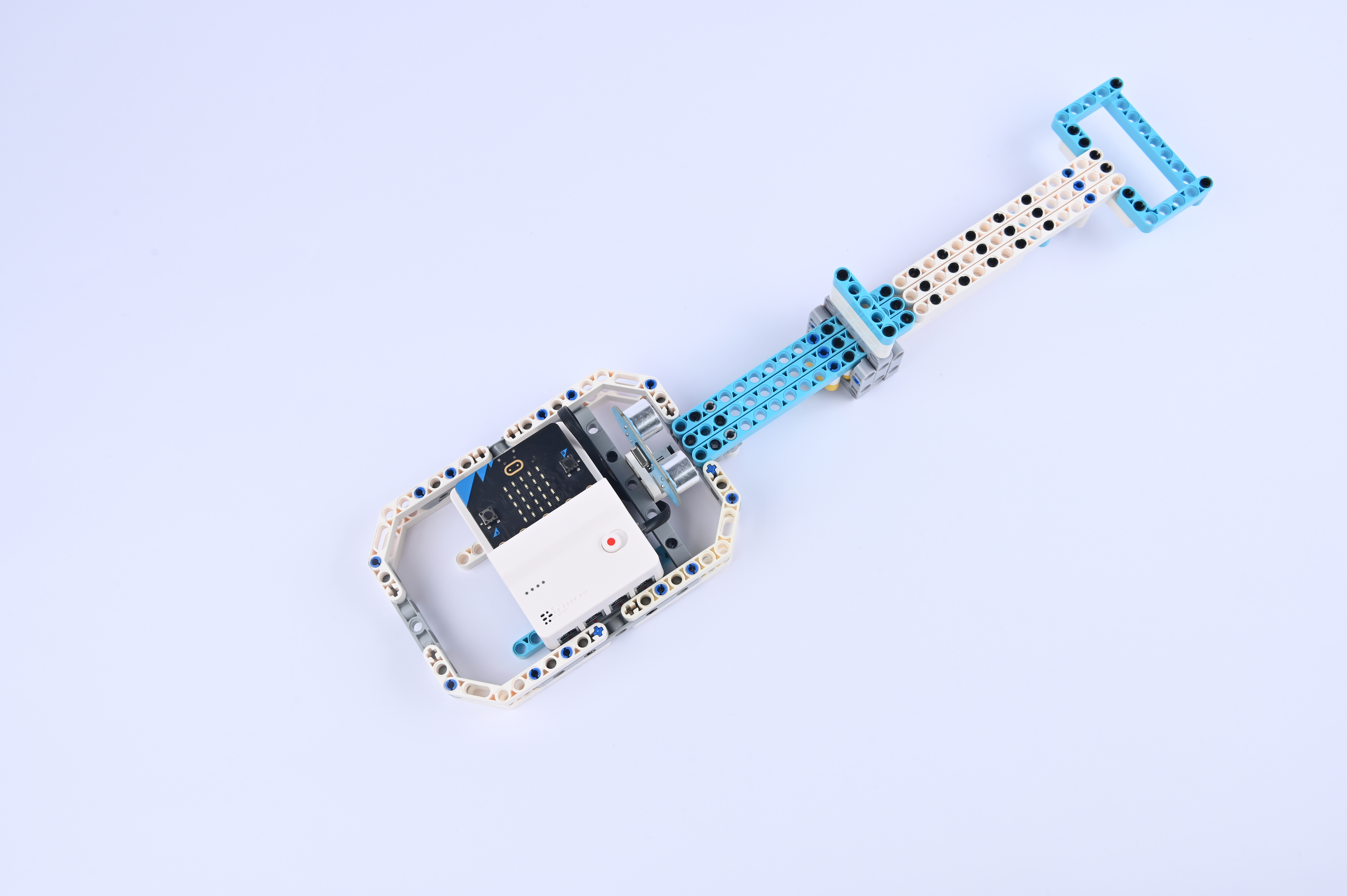
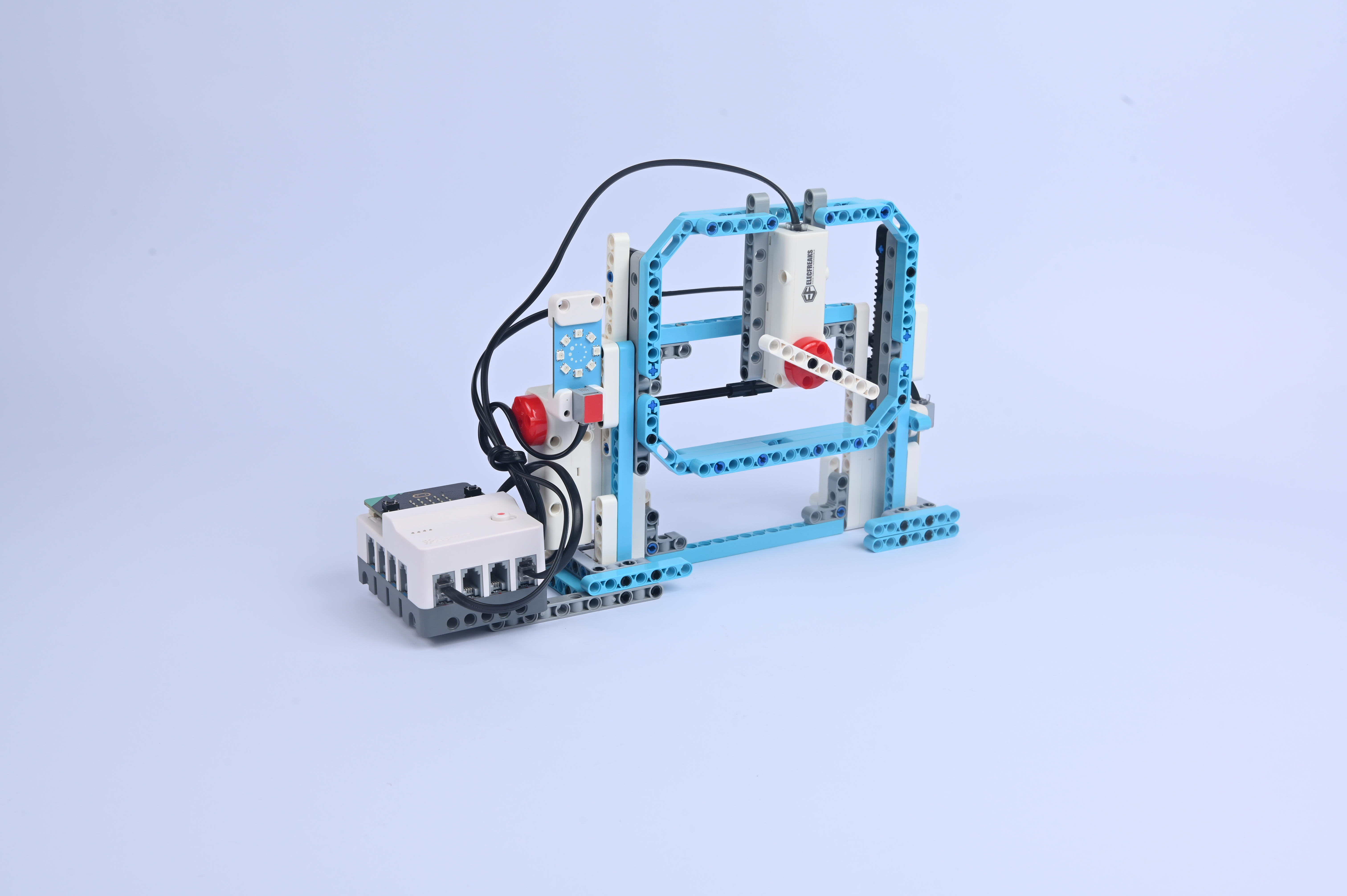
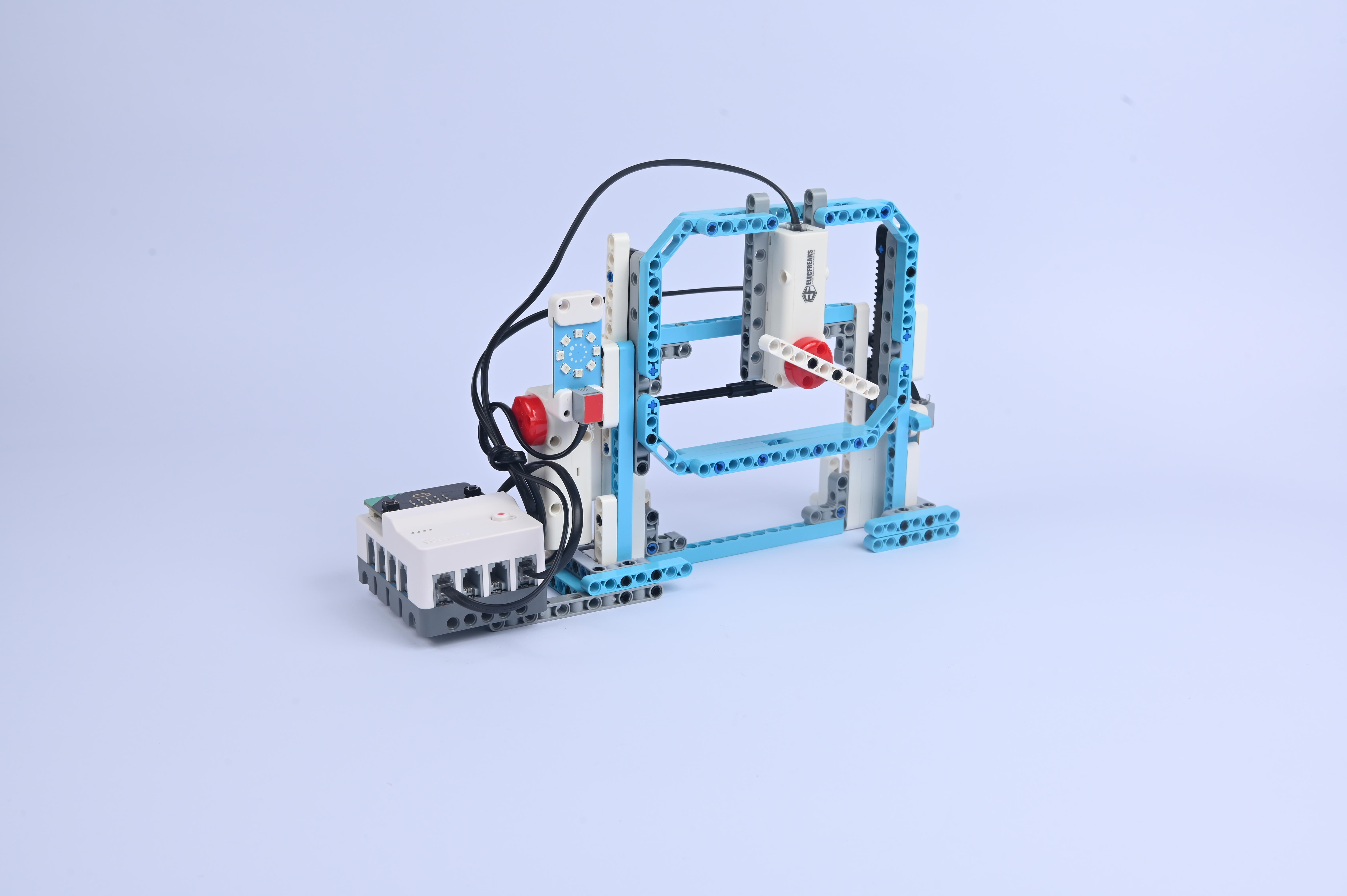
Elecfreaks · micro:bit Series
Building Blocks Kits

Nezha Pro
Ocean Kit

Dive into ocean exploration. A narrative-driven STEAM kit that follows Ian's ocean adventure — combining micro:bit programming, intelligent motors, and real-world marine science through 16 hands-on engineering challenges.

🌊 Ocean-Themed Curriculum 🤖 2 Smart Motors 🔌 11 Sensor Modules 🎓 Ages 7+
Request a Quote →
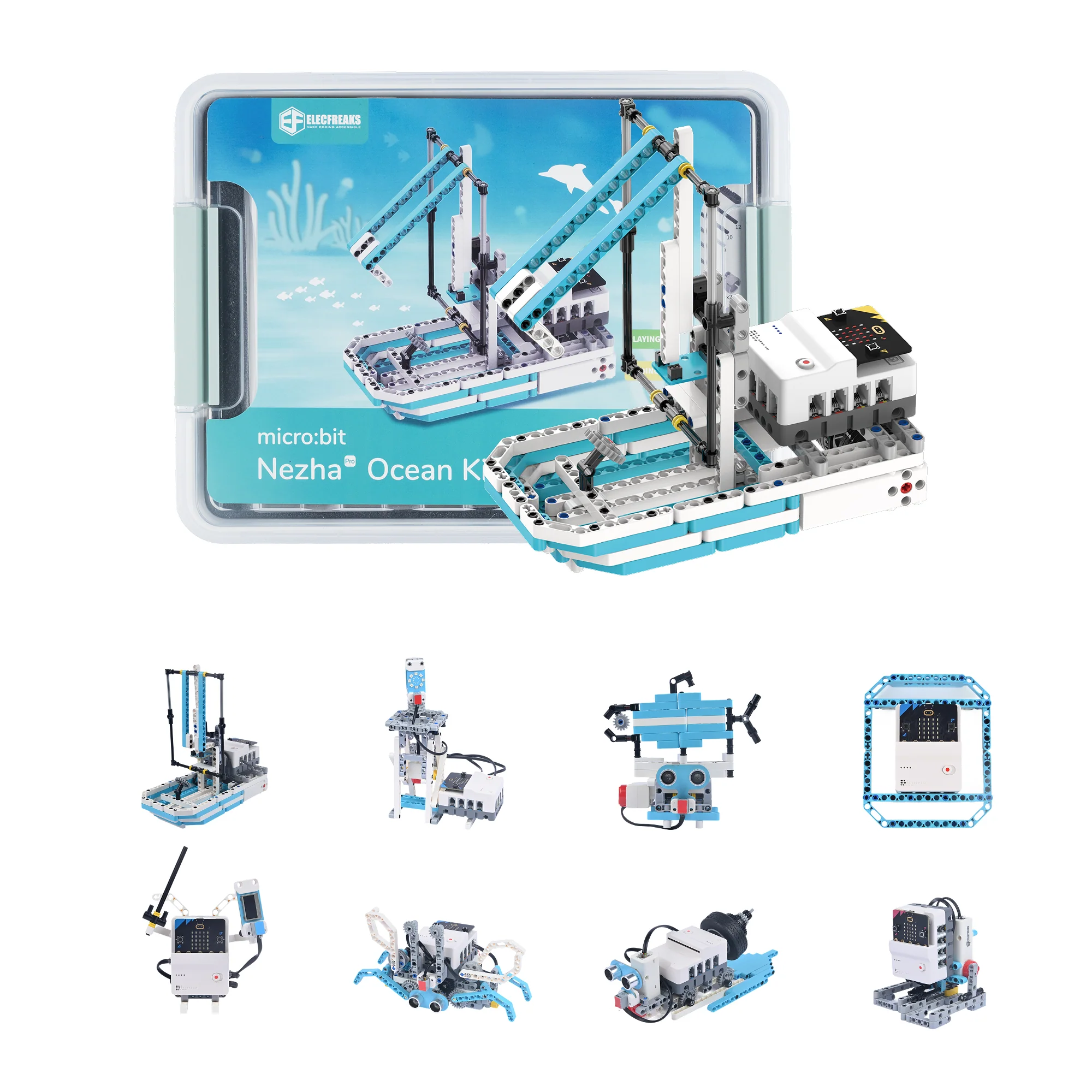
Nezha Pro Ocean Kit
16
Cases
11
Sensors
500+
Blocks
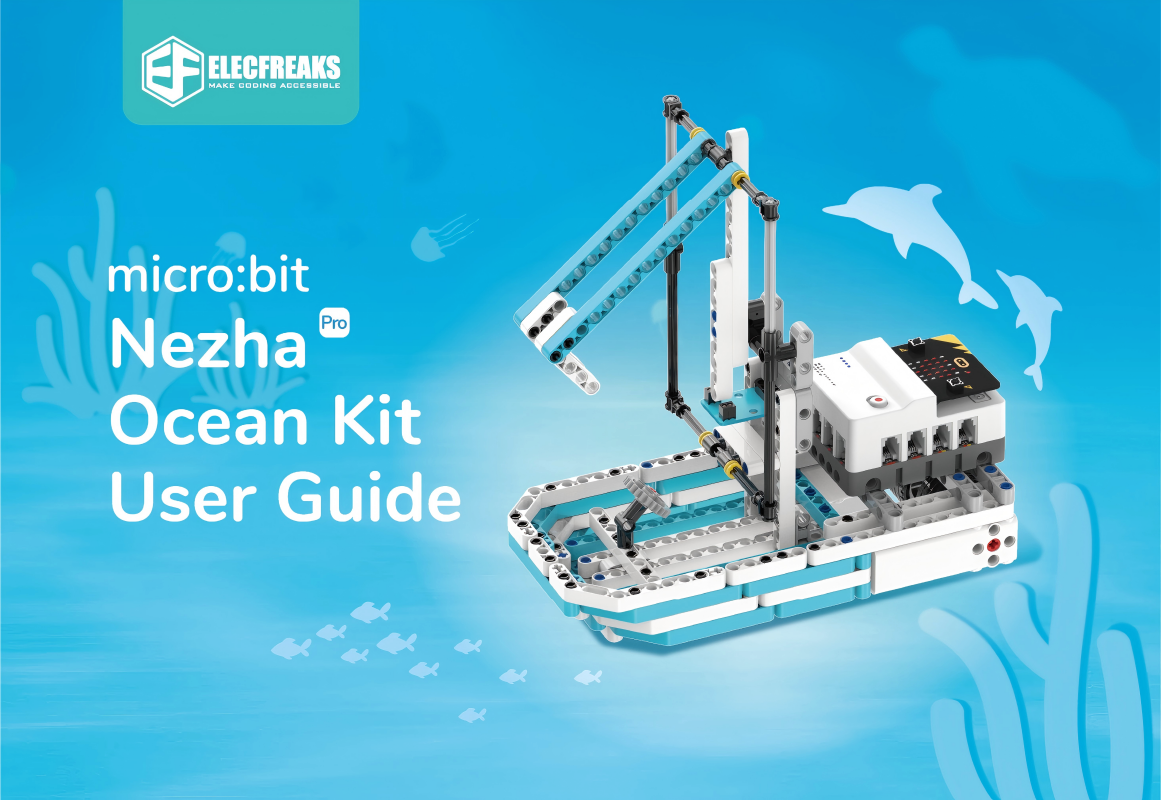
Nezha Pro Ocean Kit overview

Ocean Discovery Starts in the Classroom

The Nezha Pro Ocean Kit (EF08436) transforms marine science concepts into tangible, exciting engineering challenges. Students follow Ian's ocean journey — programming sensors, building models, and exploring real-world topics like tidal energy, aquaculture, and marine conservation.

🌊
Narrative-Driven Learning
16 cases follow Ian's ocean adventure story — from building a sailboat to designing a tidal power station — embedding STEM learning in an engaging narrative context that motivates students to explore further.
🧬
Marine Science Integration
Projects cover marine ecology, biodiversity, tidal energy, aquaculture, and ocean conservation — connecting programming and engineering to real-world environmental challenges students care about.
💻
MakeCode & Python Ready
Full support for both MakeCode block-based coding and Python text-based programming — meeting students at any skill level and growing with them through the curriculum.
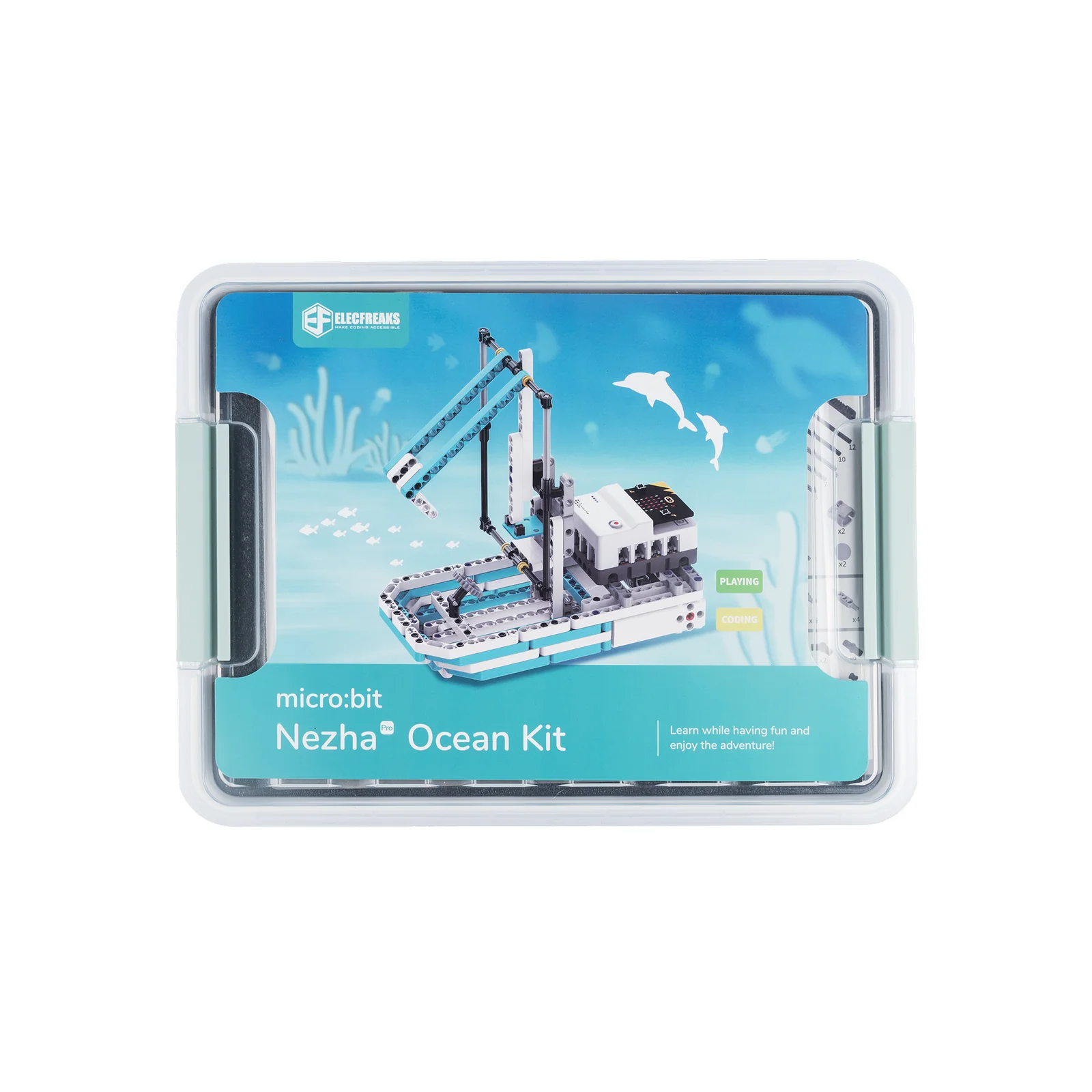
Nezha Pro Ocean Kit box

Product

micro:bit
NezhaPro Ocean Kit

A complete ocean-themed STEAM learning kit packed in a durable, organised storage box. Everything students need to explore 16 coding projects — motors, sensors, 500+ building blocks — ready out of the box.

🎓 Ages 7+ 💻 MakeCode / Python ✅ CE / RoHS Certified 🧱 LEGO & Fischer Compatible 🔋 4 hrs Max. Playtime

Built for Ocean Explorers

Every component is engineered for the classroom — durable, intuitive, and designed to support progressive learning from first build to advanced programming.

🌊
Real-World Ocean Themes
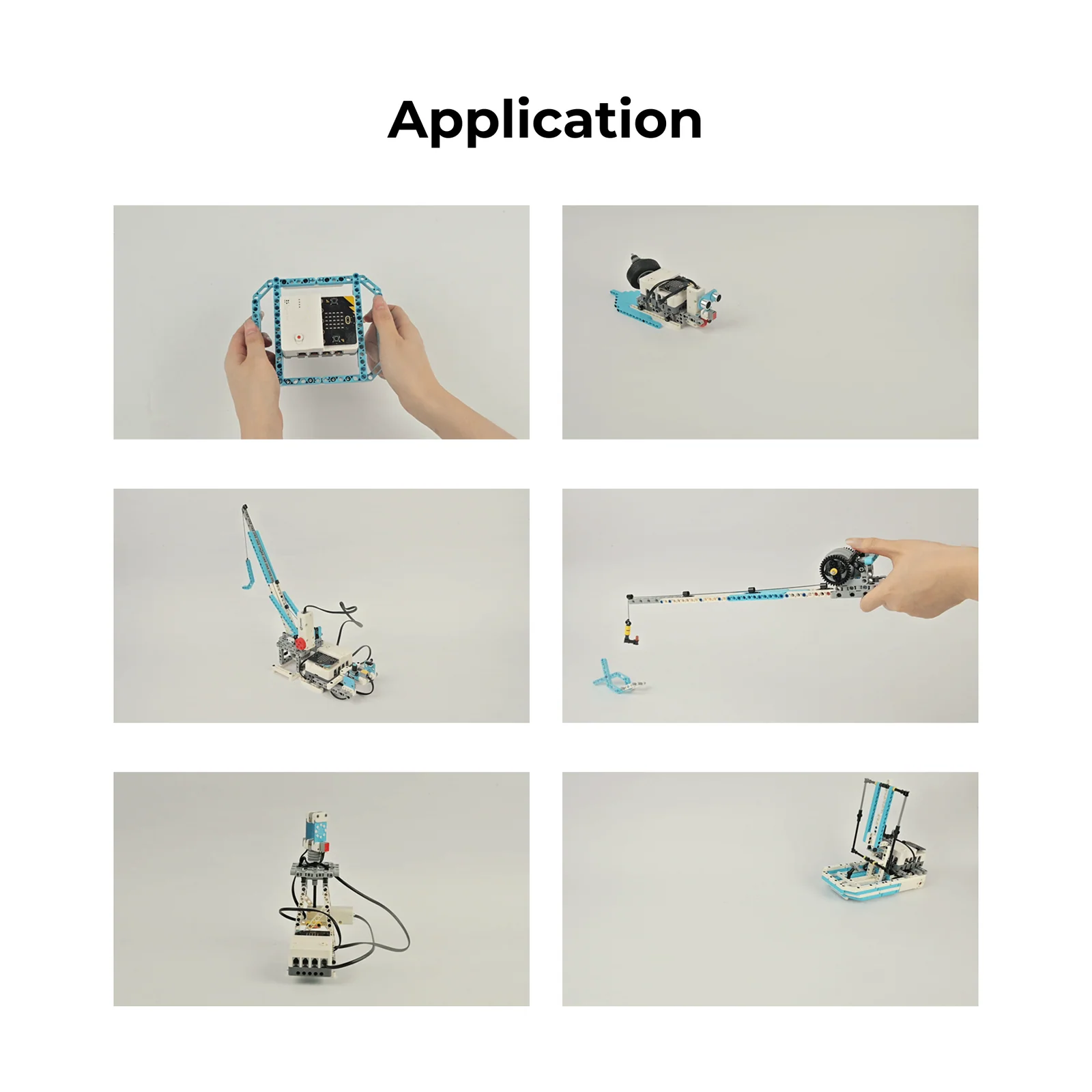
Students build and program sailboats, cranes, lighthouses, tidal generators, and aquaculture farms — grounding engineering challenges in authentic marine science contexts.
💻
micro:bit Powered
Industry-standard micro:bit microcontroller gives students access to the same core programming concepts used by professional engineers, in a beginner-friendly form factor.
🔒
Fail-Safe RJ11 Connections
Color-coded RJ11 connectors with a built-in recognition system prevent incorrect wiring — students focus on ocean science and programming, not troubleshooting hardware.
🎓
Ages 7+ Curriculum
Designed for primary school and up, aligning with STEAM standards including computational thinking, environmental science, mechanical engineering, and design thinking.
Intelligent Smart Motors
Two Planet Series Smart Motors with 125 rpm speed and ≥29 N·cm torque deliver precision control for realistic ocean-inspired mechanisms and automations.
🌿
Environmental Stewardship
Cases covering marine debris cleanup, aquaculture, and tidal power cultivate students' environmental awareness and inspire them to become ocean stewards.

Kit Highlights

Learn at Any Level

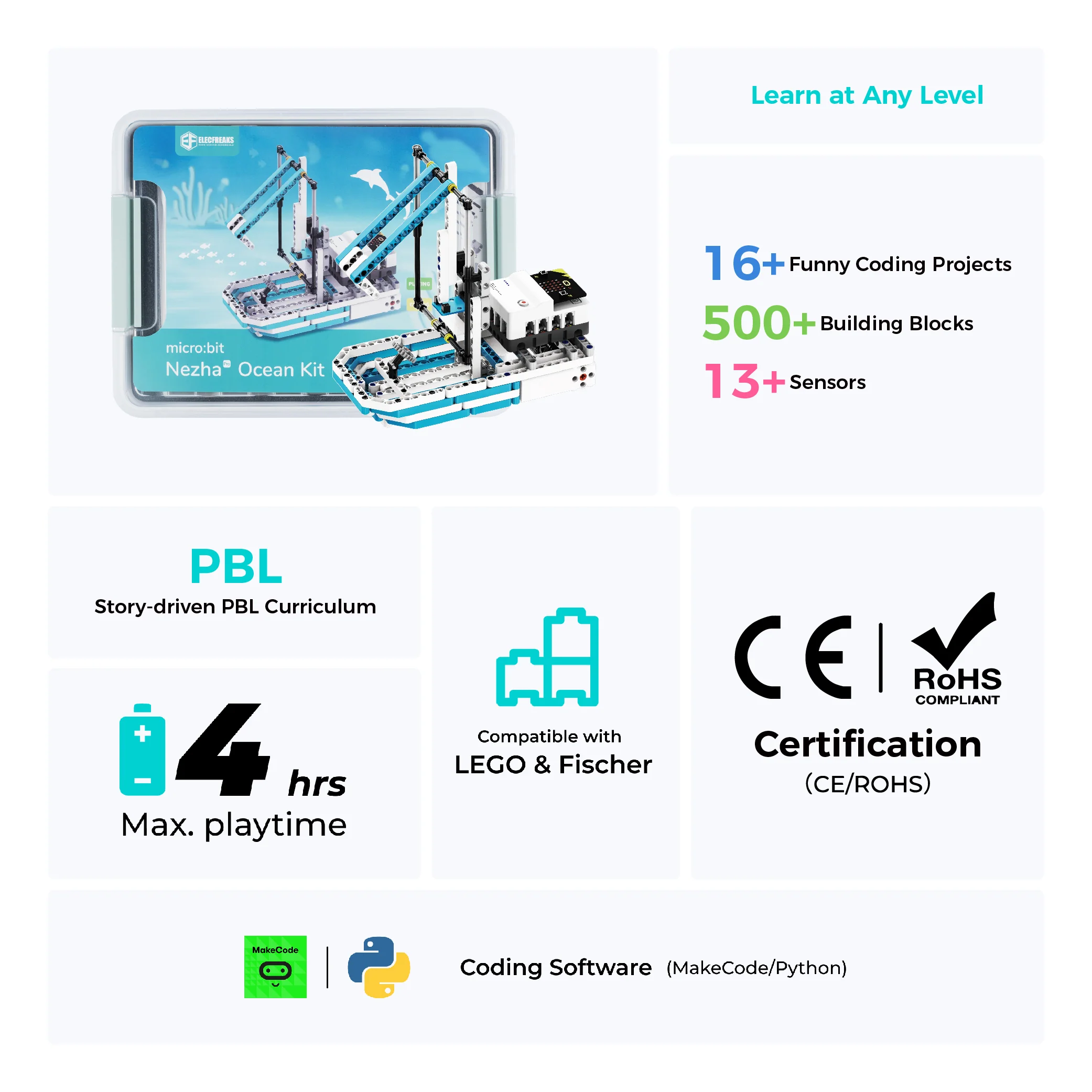
Nezha Pro Ocean Kit highlights — 16+ projects, 500+ blocks, 13+ sensors, PBL curriculum, MakeCode/Python

Key Components

Every kit includes a curated set of professional-grade electronic modules and 500+ ABS building blocks — ready for ocean-themed exploration out of the box.

Controller
Nezha Pro Multi-functional Expansion Board
SKU: EF08436 Kit · Qty: ×1
The command center for every ocean build. The Nezha Pro board connects micro:bit with motors and all Planet Series sensors through intelligent RJ11 ports — making setup fast and connections foolproof for classroom use.
Motor PortsRJ11 (intelligent)
Sensor PortsMultiple RJ11 ports
ProgrammingMakeCode / Python
Compatiblemicro:bit V1 & V2
Age Suitability7+
Actuator
Planet Series Intelligent Motor
Planet Series · Qty: ×2
Powers every moving ocean build — from rotating fishing rods to sluice gates and beach buggies. Continuous 360° operation with precise speed and angle feedback, protected by built-in temperature, stall, and voltage safeguards.
No-load Speed125 rpm
Stall Torque≥ 29 N·cm
Operating Angle360° × N (continuous)
ProtectionTemp / Stall / Voltage
InterfaceRJ11
Sensing
Planet Series Sensor Suite
11 Electronic Modules · Plug-and-Play RJ11
A comprehensive suite of real-world sensors that bring ocean projects to life. From measuring temperature at sea to detecting water levels and obstacles, each sensor connects instantly and programs in minutes.
Ultrasonic Sensor×1 · Distance ranging
Dual Line Tracker×1 · Path following
OLED Display×1 · Data readout
Collision Sensors×2 · Impact detection
Rainbow Light Ring×1 · Color LED output
Light Sensor×1 · Ambient light
Potentiometer×1 · Analog control
Water Level Sensor×1 · Water detection
DHT11 Sensor×1 · Temp & humidity
Construction
ABS Building Blocks + Accessories
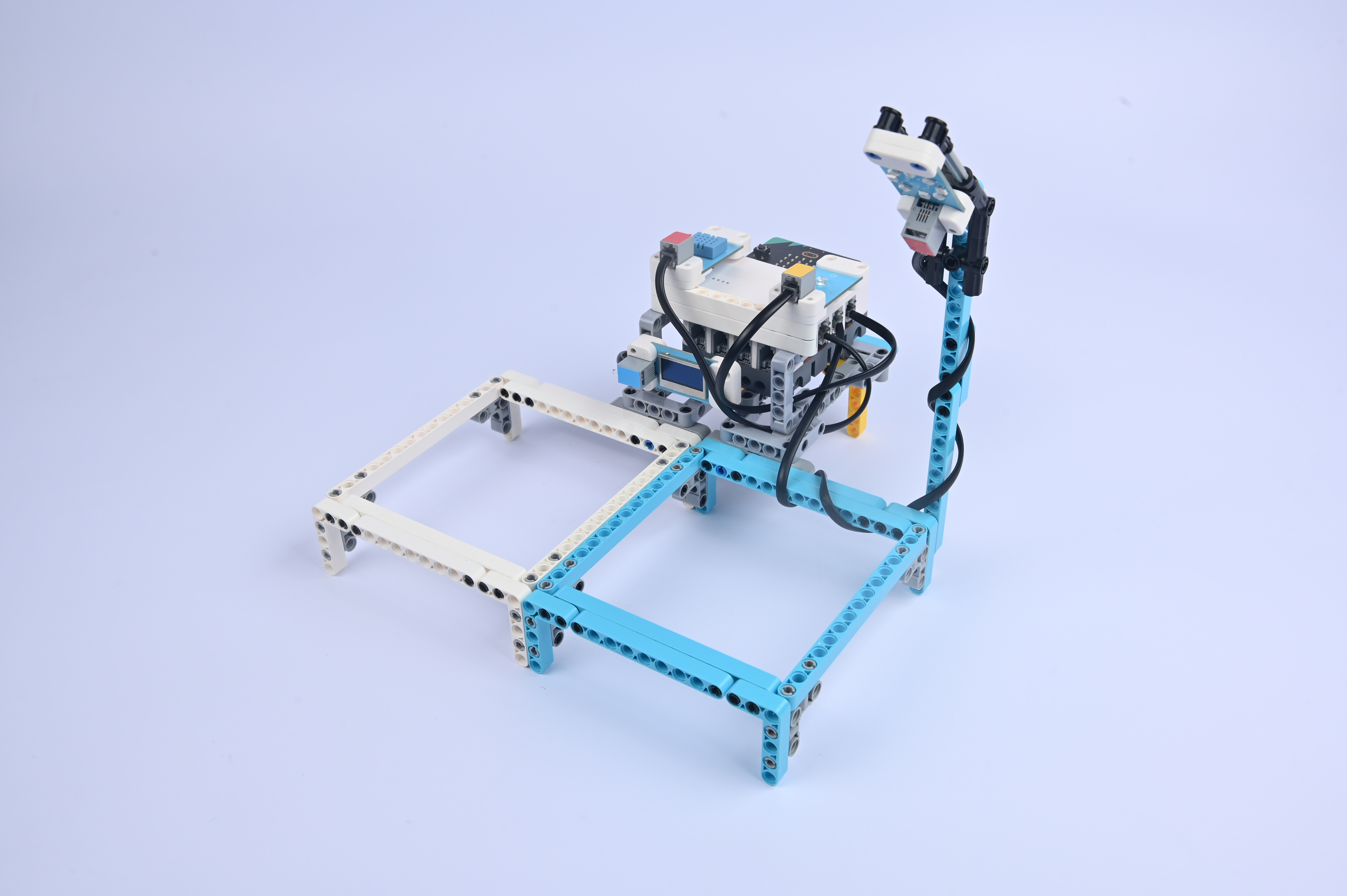
500+ Pieces · Ocean Adventure Theme
Over 500 high-quality ABS building block pieces compatible with standard brick systems, plus mechanical components including worm gears, ratchets, linkages, and structural elements for all 16 ocean project cases.
Block Count500+ ABS pieces
Mechanical PartsGears, ratchets, linkages
CompatibilityStandard brick system
Packaging370 × 288 × 195 mm
Projects CoveredAll 16 cases

Components In-Depth

A closer look at the key hardware inside every Nezha Pro Ocean Kit — from the expansion board to the intelligent motor and full sensor suite.

⚙️
Introduction to the Expansion Board
Nezha Multi-functional Expansion Board V2

The Nezha Multi-functional Expansion Board V2 is designed specifically for creative micro:bit programming. It features 8 sensor interfaces and 4 closed-loop motor interfaces using foolproof, anti-reverse-insertion RJ11 connectors with a colour recognition system to help students correctly connect Planet Series sensors. Fast charging ensures a full charge within 50 minutes, supporting up to 4 hours of continuous use. An innovative no-main-control mode lets beginners control motor forward and reverse rotation with physical buttons — no coding required to start building.

Nezha Multi-functional Expansion Board V2 — overview diagram
Function Introduction
1
8 sensor interfaces and 4 closed-loop motor interfaces, uniformly using RJ11 connectors for convenient, error-free connections
2
Colour recognition system — label colours match Planet Series sensors, guiding students to the correct port every time
3
No-main-control mode: motor forward and reverse rotation can be controlled via onboard buttons, making it easy for beginners and younger children to get started immediately
4
Fully charged in 50 minutes via Type-C; battery life of up to 4 hours — with 4 indicator lights and a physical power toggle switch
5
Compatible with standard building block structural parts, unlocking more ways to integrate electronics into constructions
Nezha Expansion Board — function diagram
Pin Introduction
Motor Interfaces4 × RJ11 (closed-loop)
Sensor Interfaces8 × RJ11 (3.3 V, 1 A max)
Charging PortType-C
Charging Time50 min (fast charge)
Battery LifeUp to 4 hours
Power Indicator4-level LED indicator
Power SwitchPhysical toggle
Working Voltage6.4 V – 8.4 V
Sensor Output3.3 V
micro:bit ConnectorEdge connector (top)
Dimensions80 × 60 × 44 mm
Block InterfaceCompatible
Nezha Expansion Board — pin introduction diagram
Introduction to the Intelligent Motor
Planet Series Intelligent Building Block Motor · SKU: EF05071

The Planet Series Intelligent Building Block Motor combines the characteristics of high-precision servos and high-efficiency motors to create an all-round drive core. It delivers ultra-high control precision, instantaneous response speed, and strong torque — with a built-in intelligent protection system covering temperature monitoring, stall detection, and voltage stabilisation protection. This motor powers everything from fishing rods and cranes to beach buggies across all 16 ocean cases.

Planet Series Intelligent Motor — overview diagram
Function Introduction
1
Combines the characteristics of high-precision servos and high-efficiency motors — precise angle control and powerful torque in a single unit
2
Realises precise control and feedback of rotation angle, enabling accurate motion control with ≤3° repeat positioning accuracy
3
High torque (≥29 N·cm) and fast response speed — suitable for high-torque application scenarios like cranes, sluice gates, and transport vehicles
4
Built-in triple protection: temperature protection, voltage protection, and stall protection — safe for extended classroom sessions
5
Compatible with standard building block structural parts, supports speed reading, angle reading, and the colour recognition system
Planet Series Intelligent Motor — function diagram
Technical Parameters
SKUEF05071
Operating Voltage5.0 – 9.0 V
No-load Speed125 rpm
Stall Torque≥ 29 N·cm
Repeat Positioning≤ 3°
Operating Angle360° × N (continuous)
ConnectionRJ11
Speed ReadingSupported
Angle ReadingSupported
Temp ProtectionSupported
Stall ProtectionSupported
Weight31 g
🔌
Sensor Introduction
Planet Series · Plug-and-Play RJ11 Interface

The Ocean Kit includes 9 Planet Series sensors, each connecting instantly via RJ11 with colour-coded port matching. Every sensor is directly programmable in MakeCode or Python — no wiring expertise needed.

OLED Display
OLED Display
Displays data, text, and readouts on screen. Used to print sensor values and status messages across weather, aquaculture, and navigation projects.
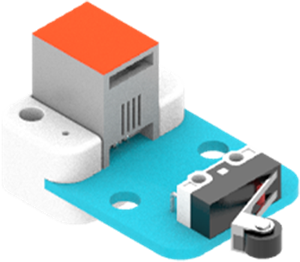
Collision Sensor
Collision Sensor ×2
A sensor module based on collision elements for impact and contact detection — used in transport vehicles, cranes, and obstacle-detection builds.
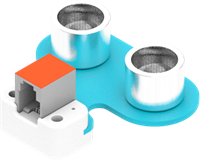
Ultrasonic Sensor
Ultrasonic Sensor
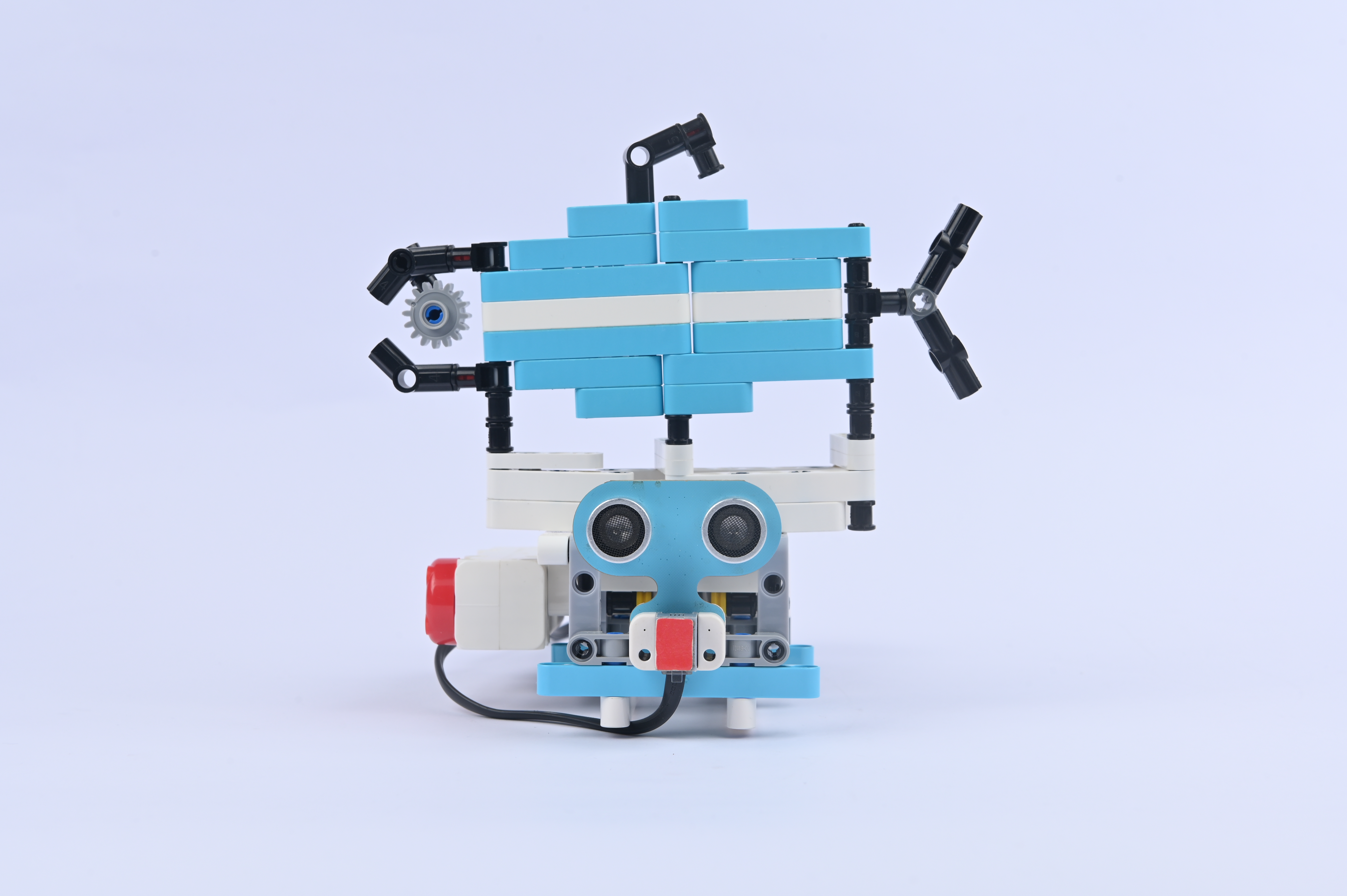
Short-distance measurement via sound waves. Enables obstacle avoidance in the fish, beach buggy, and marine debris cleanup cases.
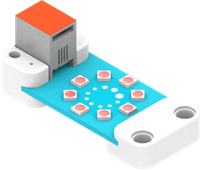
Rainbow Light Ring
Rainbow Light Ring
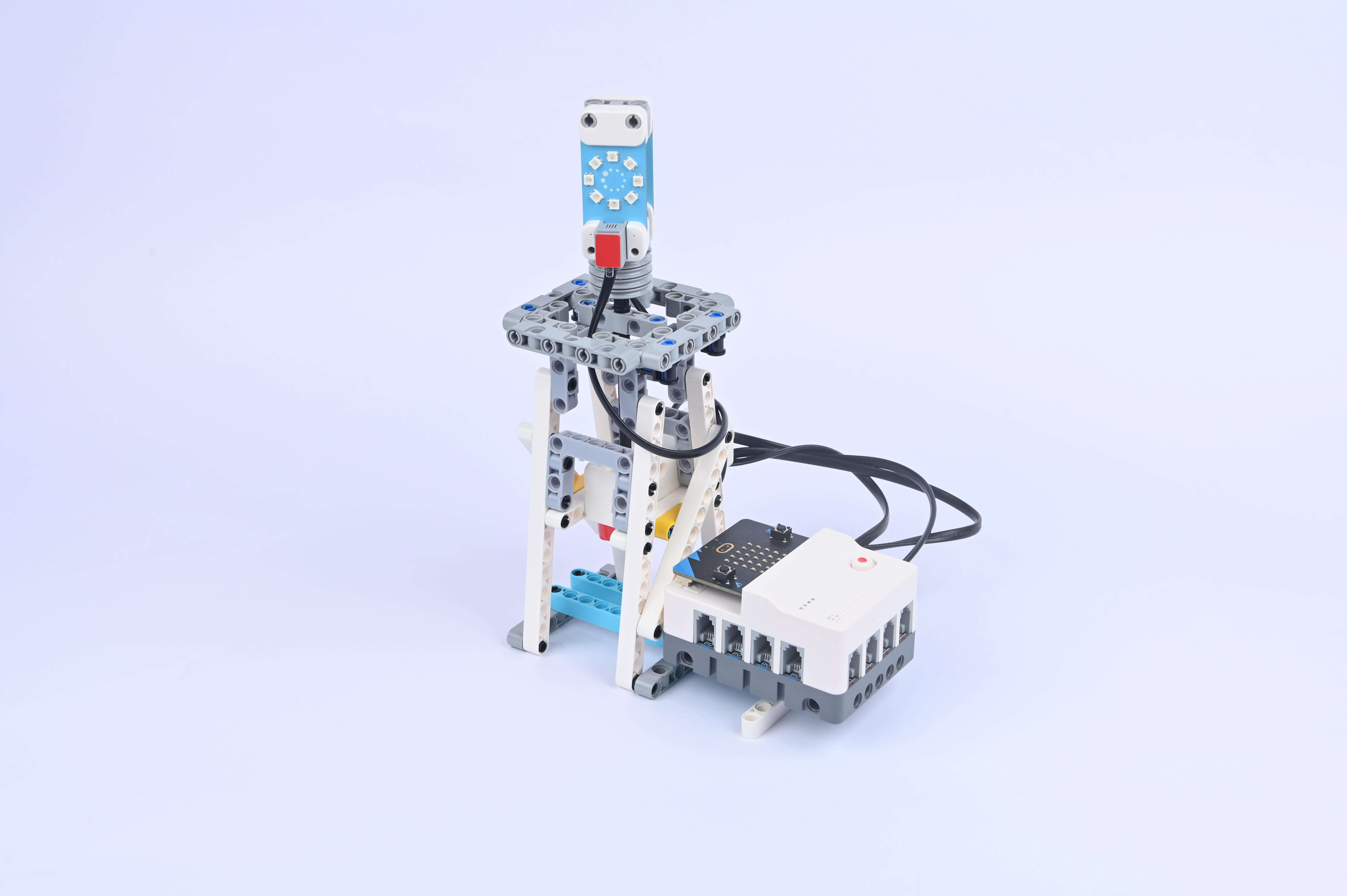
8-LED ring capable of displaying full RGB colours. Used in the lighthouse case and as visual feedback for status and alert conditions.
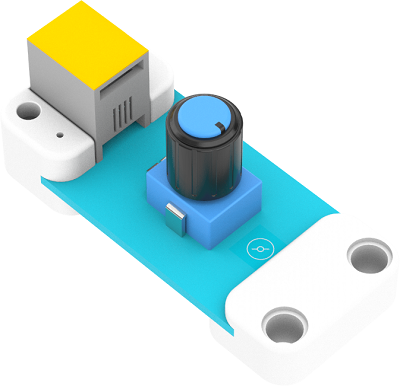
Potentiometer
Potentiometer
Analog potentiometer with 300° rotation range, returning values of 0–1023. Used in the crane and guitar cases for variable control input.
Light Sensor
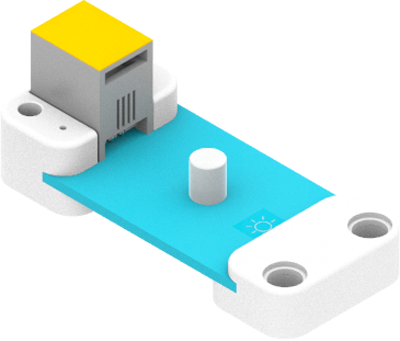
Light Sensor
Detects ambient light intensity. Used in the lighthouse case to trigger automatic light activation based on environmental brightness.
DHT11 Temperature and Humidity Sensor
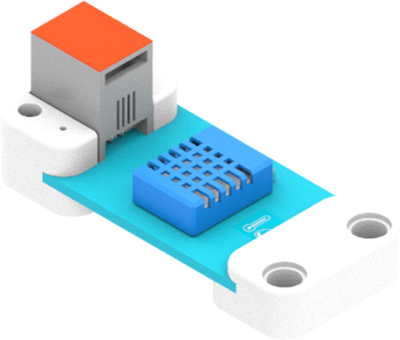
DHT11 Temp & Humidity
Measures ambient temperature and humidity. Core to the Weather Pal and offshore aquaculture farm cases for environmental monitoring.
Dual-channel Line Tracking Sensor
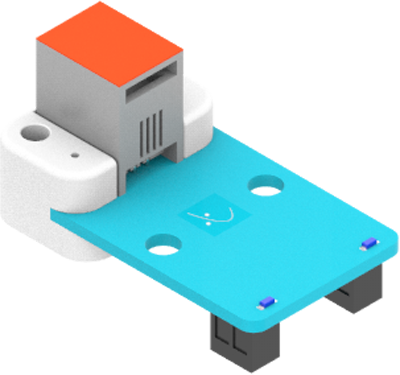
Dual-channel Line Tracker
Integrates two reflective infrared pairs for line-following detection. Used in the sailboat and transport vehicle cases for guided navigation.
Water Level Sensor
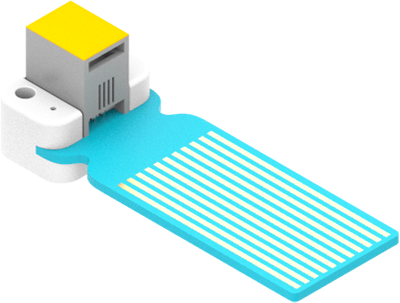
Water Level Sensor
Measures water level through exposed parallel wires. Used in the sluice gate case to detect water levels and trigger automated gate responses.
📚
Case Knowledge Framework
Progressive STEAM Learning Across 16 Cases

Each case in the Ocean Kit is mapped to a structured knowledge framework that spans mechanical engineering, electronics, programming, and marine science. Cases progress in complexity — from basic sensor use and branch logic in early cases to nested conditionals, energy conversion, and system design in later builds.

Case Knowledge Framework — all 16 cases knowledge map
🤖
Mechanical Structures
Worm gears, ratchets, linkages, cranks — real mechanisms applied in context from cranes to fishing rods
💻
Programming Concepts
Branch logic, variables, loops, random blocks, nested conditions — introduced progressively across cases 1–16
🔌
Sensor Applications
Each sensor is introduced with a dedicated case: line tracking, ultrasonic, DHT11, light, water level, OLED and more
🌊
Marine Science
Tidal energy, aquaculture, ocean ecology, debris cleanup, and navigation — STEM grounded in real ocean challenges

What's in the Box

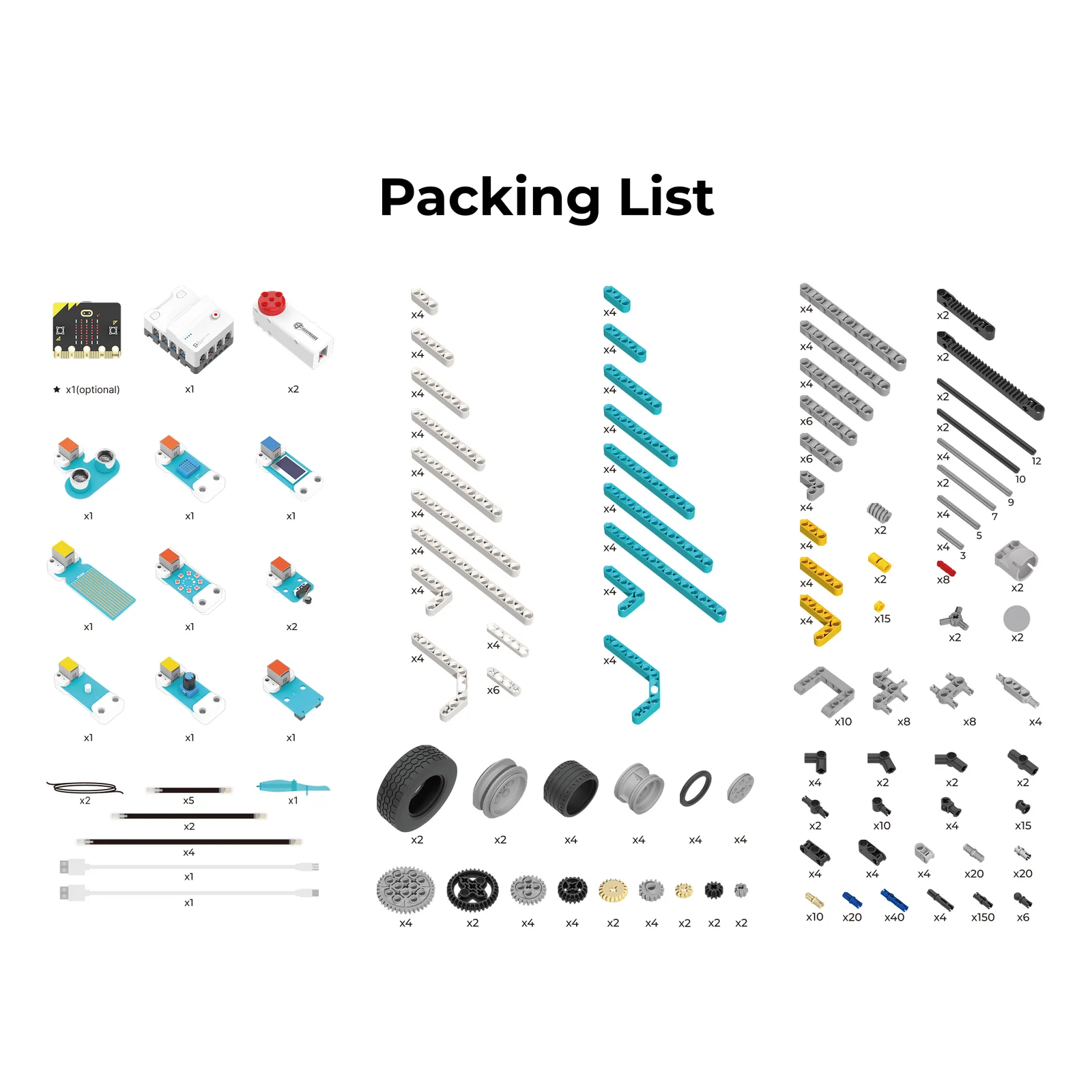
Complete Packing List

Nezha Pro Ocean Kit packing list — all sensors, motors, building blocks and accessories
The Story Journey

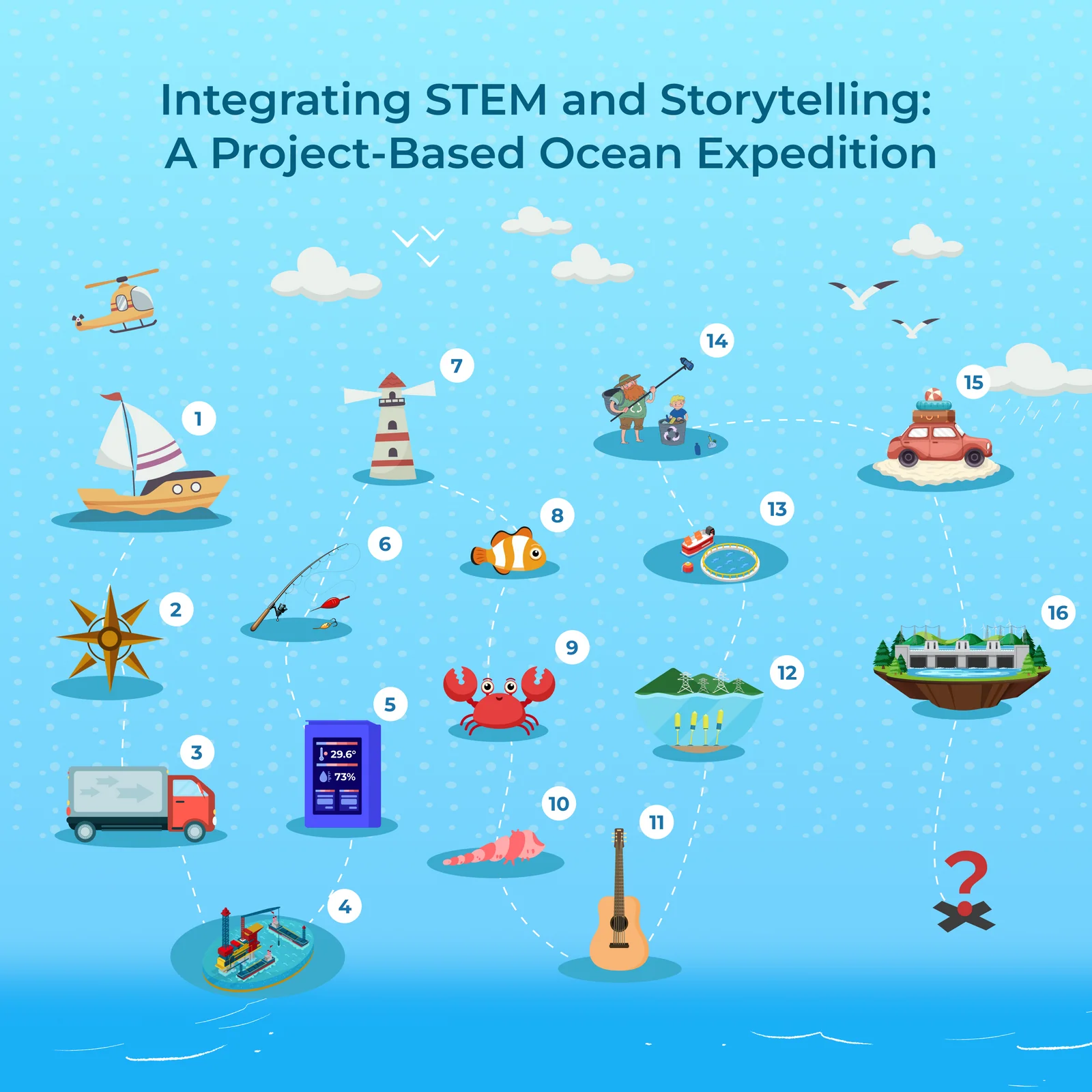
Integrating STEM & Storytelling:
A Project-Based Ocean Expedition

16-case ocean expedition STEM journey map

16 Ocean Adventure Projects

Each case follows Ian's journey across the sea — combining storytelling with real engineering and marine science challenges that build progressively in complexity.

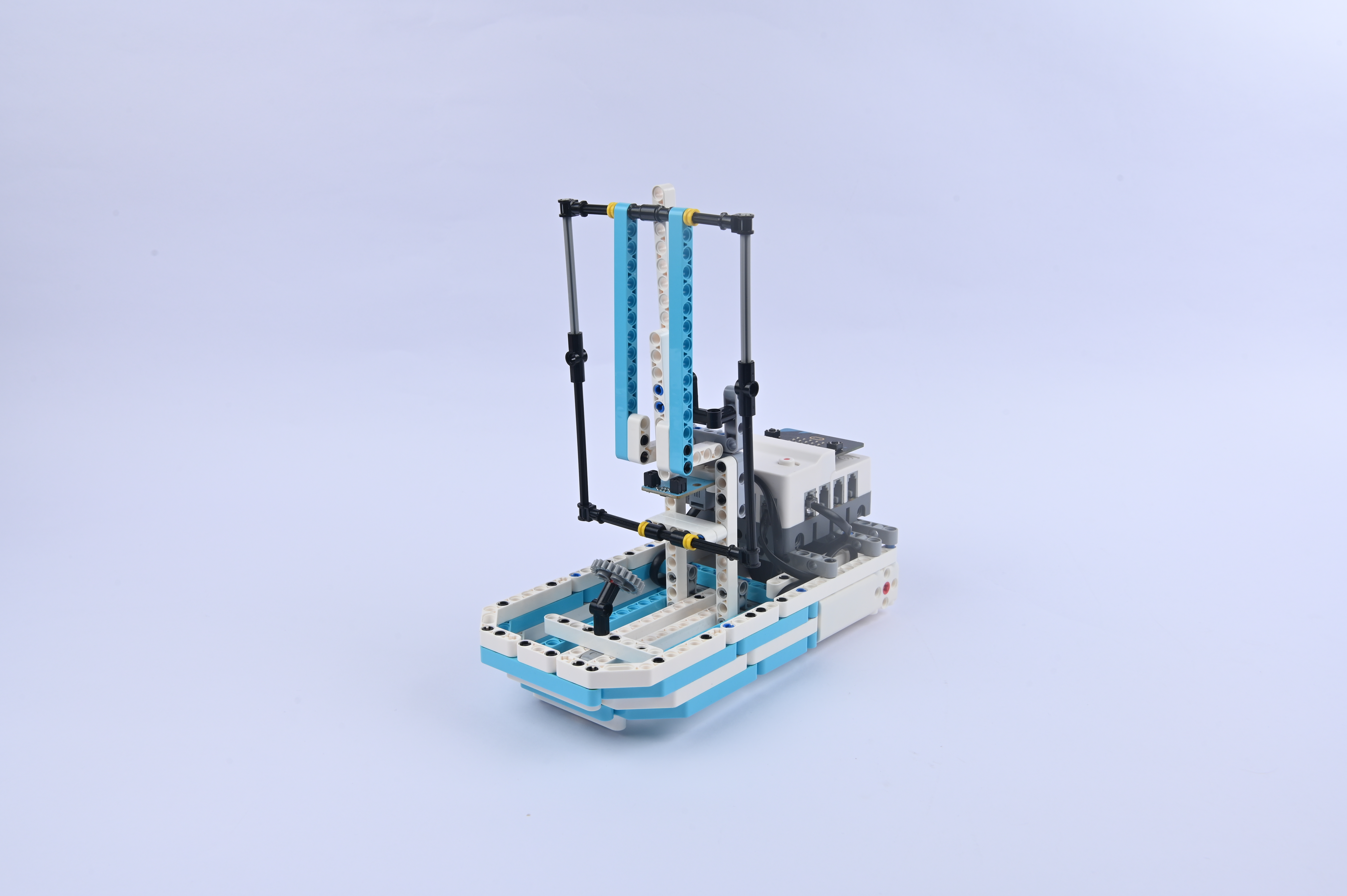
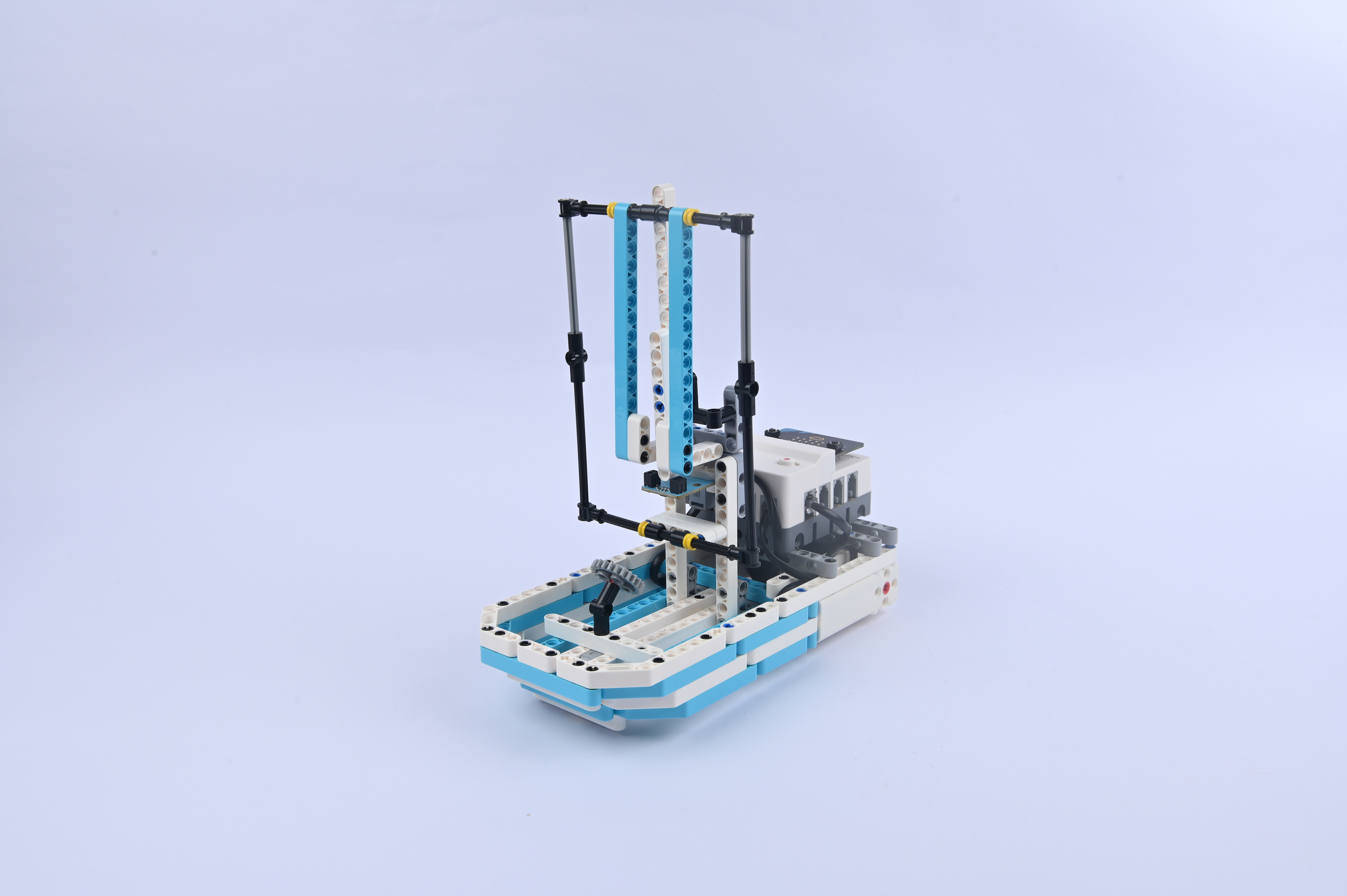
Sailboat
Case 01
Sailboat
Ian dreams of exploring the ocean to find his father who departed at sea years ago. Clutching his father's nautical log, he dreams of sailing a small boat to uncover deep ocean mysteries — and needs your help to build it.
Teaching Objectives
  • Understand different types of boats and power-driven boat mechanisms
  • Become familiar with the dual-track line sensor component
  • Learn to apply branch structure building blocks in programming
Compass
Case 02
Compass
Ian built a boat but worries about finding his way across the sea. As night falls, he becomes anxious remembering stories of missing fishing boats. Facing the vast ocean, he wonders: "Can I really find my way?"
Teaching Objectives
  • Learn about the historical development of compass technology
  • Investigate how a compass functions
  • Grasp the concept of variables and apply variable building blocks in programming
Transport Vehicle
Case 03
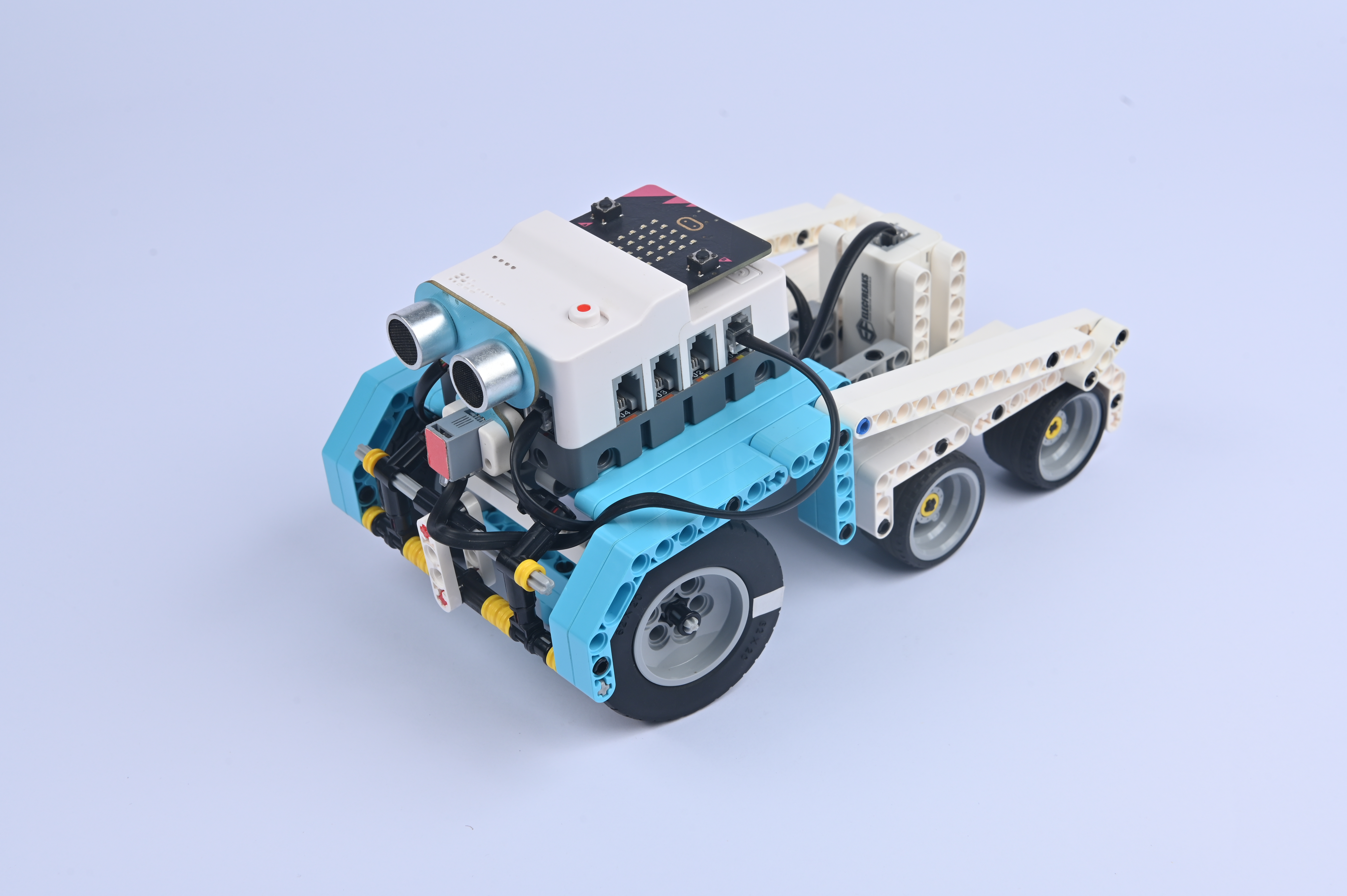
Transport Vehicle
Ian faces a logistical challenge at his town's entrance — numerous supplies including water barrels, grain boxes, rope, nautical instruments, and daily goods all need transport to the port. He needs an efficient solution to move everything without countless trips.
Teaching Objectives
  • Develop understanding of potentiometer sensor functionality
  • Learn about collision sensor operation
  • Explore maritime transportation history and modern vehicle characteristics
Crane
Case 04
Crane
At the port, Ian must load supplies onto his ship — including a heavy box of navigation instruments weighing over 150 catties. What methods could help Ian accomplish this loading task without manual lifting?
Teaching Objectives
  • Develop comprehension of crane mechanisms and their functions
  • Explore worm gear structural principles and applications
  • Investigate multiple programming approaches for controlling crane systems
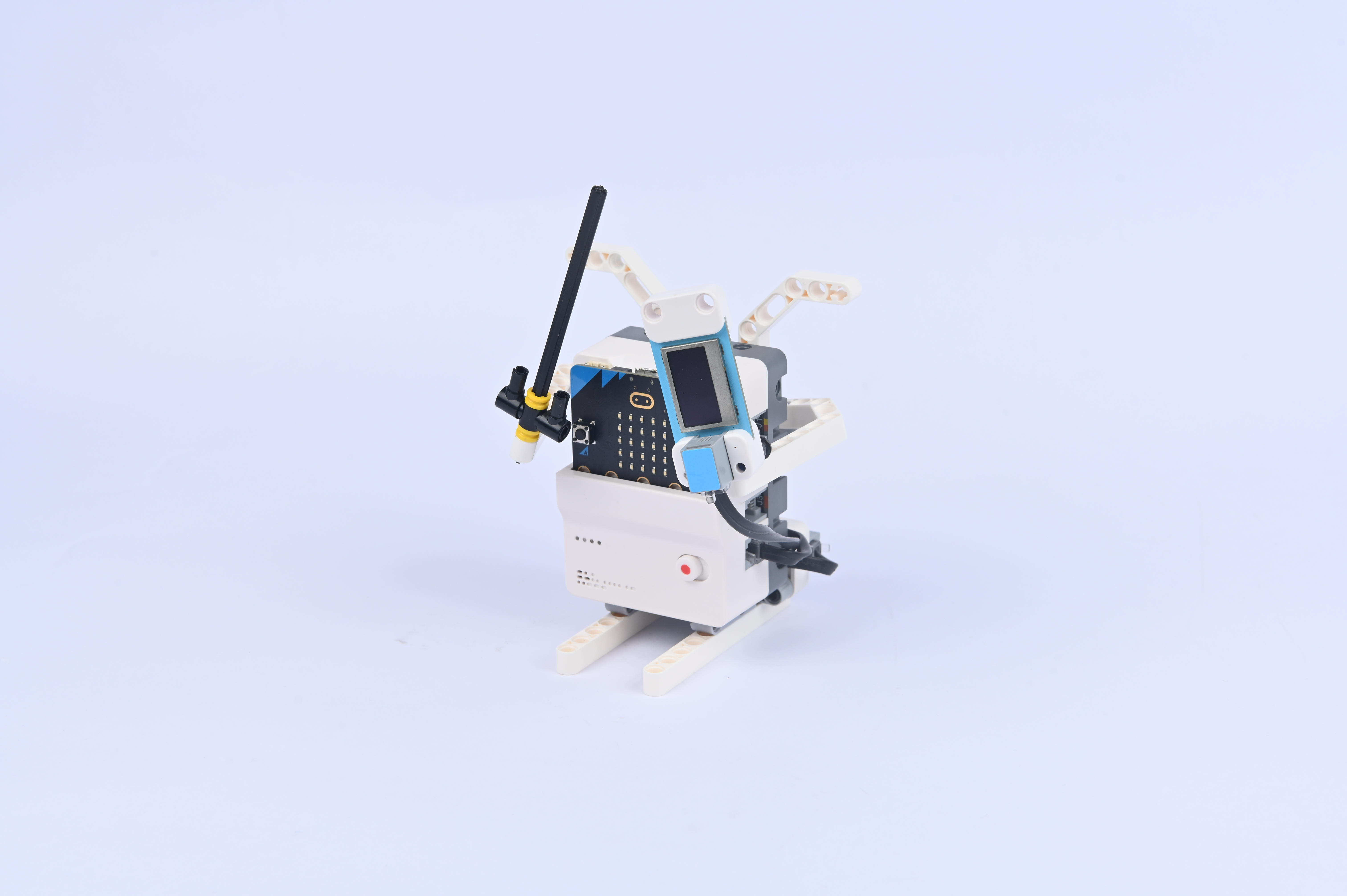
Weather Pal
Case 05
Weather Pal
Ian is aboard the ship "Hope" sailing away from port into the open ocean. Facing the hot midday sun, he wishes to know the current temperature and humidity — a challenge his friends can help solve with the right sensors.
Teaching Objectives
  • Develop understanding of OLED display technology and its applications
  • Learn about the DHT11 temperature and humidity sensor
  • Gain practical competency using OLED and DHT11 building blocks in projects
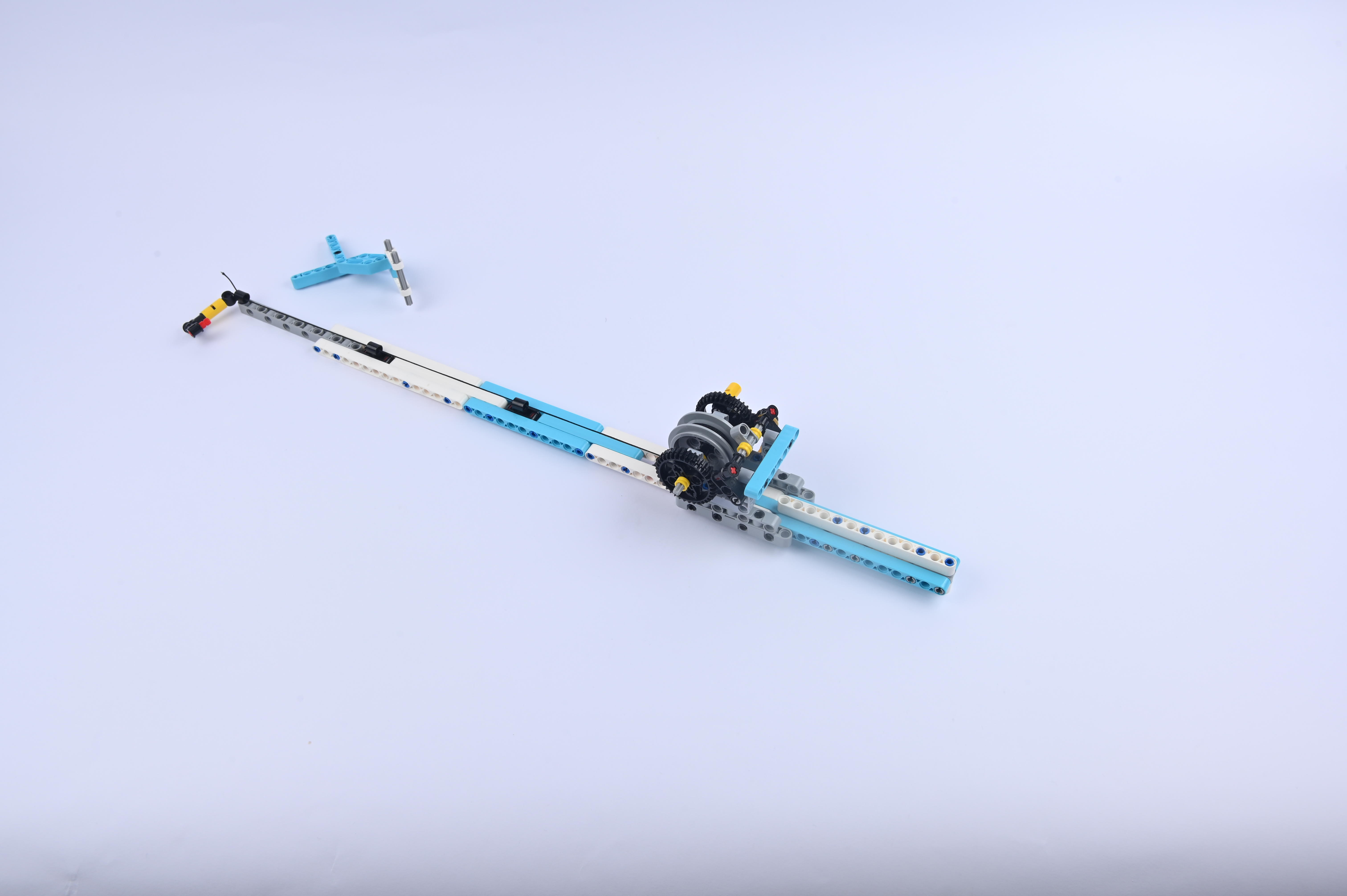
Fishing Rod
Case 06
Fishing Rod
Ian has been sailing for a week on the Hope and wants to take a fishing break on this calm ocean day. However, he cannot find a fishing rod anywhere on the boat — can his friends build one from building blocks?
Teaching Objectives
  • Recognise the ratchet mechanism and understand its characteristics
  • Understand the ratchet's role in one-directional motion control
  • Explore the history and current state of human marine fishing development
Lighthouse
Case 07
Lighthouse
Ian has been sailing for two weeks when a violent storm hits, tilting his ship by 15 degrees. He spots an island through the rain but cannot locate the port in the darkness. What can students do to help guide Ian safely to shore?
Teaching Objectives
  • Develop understanding of lighthouse technology and functionality
  • Learn about light sensors and Rainbow LED ring modules
  • Acquire proficiency using light sensor and Rainbow LED ring programming blocks
Fish
Case 08
Fish
Ian and his friend Jack attend a Harvest Festival building block competition on an island, where they must construct a fish model for the contest. The theme challenges participants to create the most lifelike fish designs possible.
Teaching Objectives
  • Develop understanding of ultrasonic sensor technology
  • Learn to effectively use ultrasonic building blocks in projects
  • Investigate and analyse how marine creatures move through water
Crab
Case 09
Crab
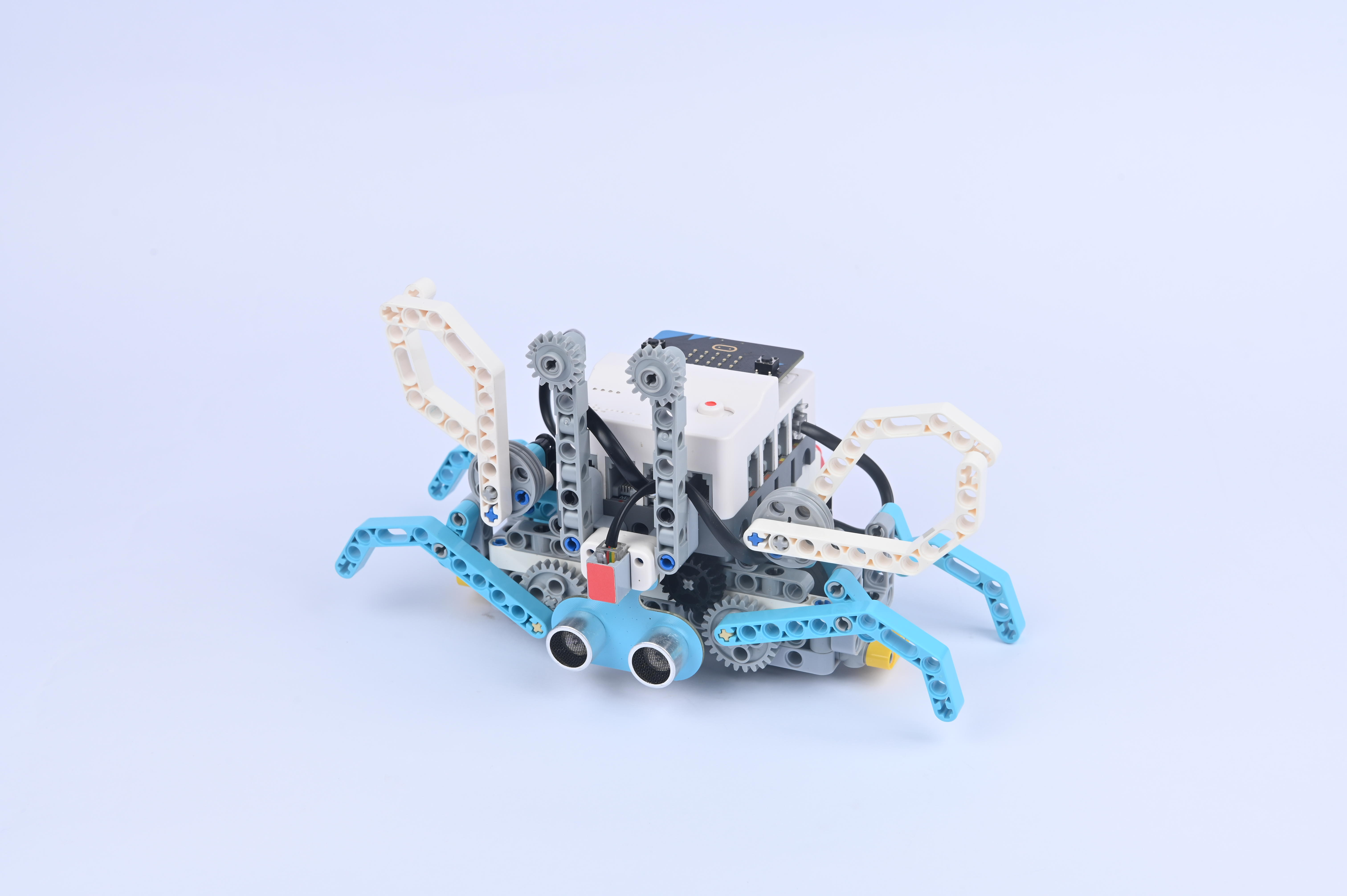
Jack and Ian attend a building block crab race where mechanical crabs chase each other while the audience cheers loudly for their favourite contestants. The pair join this competitive event featuring programmable mechanical crabs.
Teaching Objectives
  • Understand the linkage mechanism and how it translates motion
  • Master the use of random building blocks in programming
  • Explore the movement patterns of marine animals
Conch
Case 10
Conch
Ian and Jack attend a conch crawling competition where the slowest-moving conch model wins. Jack challenges Ian, claiming expertise in building conchs and inviting friendly competition to see whose design moves most elegantly.
Teaching Objectives
  • Understand worm gears and their mechanical advantages
  • Master the use of logic operation building blocks
  • Explore the movement patterns of marine animals
Guitar
Case 11
Guitar
Ian and Jack encounter local residents dancing to drumbeats. Jack excitedly invites Ian to join "this music carnival," expressing gratitude for the sea as "our treasure, bringing us countless amounts of food." Music fills the ocean air.
Teaching Objectives
  • Develop proficiency with nested conditional statements and their logical structure
  • Learn when interval classification is the appropriate programming approach
Tidal Power Generation
Case 12
Simulating Tidal Power Generation
Ian encounters a crisis on a small island where a storm has damaged the power generation equipment, creating an urgent electricity shortage. The community needs an innovative solution to restore power — and the ocean's tides hold the answer.
Teaching Objectives
  • Develop understanding of what tidal power generation is and how it functions
  • Investigate the connections between different energy forms and how they convert
Offshore Aquaculture Farm
Case 13
Simulating an Offshore Aquaculture Farm
Ian learns that Jack's offshore aquaculture farm was damaged by a storm. Ian decides to help with repairs and considers what environmental sensors could monitor ocean conditions and improve aquaculture practices going forward.
Teaching Objectives
  • Understand the concept of offshore aquaculture and its importance
  • Learn how seawater characteristics like salinity and temperature affect cultured organisms
Marine Debris Cleanup
Case 14
Simulating Marine Debris Cleanup
Jack observes storm debris floating in the ocean and worries about environmental damage to marine life. Ian suggests they work together to clean it up. How can students design a debris removal solution that reduces ocean pollution?
Teaching Objectives
  • Understand the negative impacts of marine debris on ocean environments
  • Create and propose a practical marine debris recycling system design
Beach Buggy
Case 15
Beach Buggy
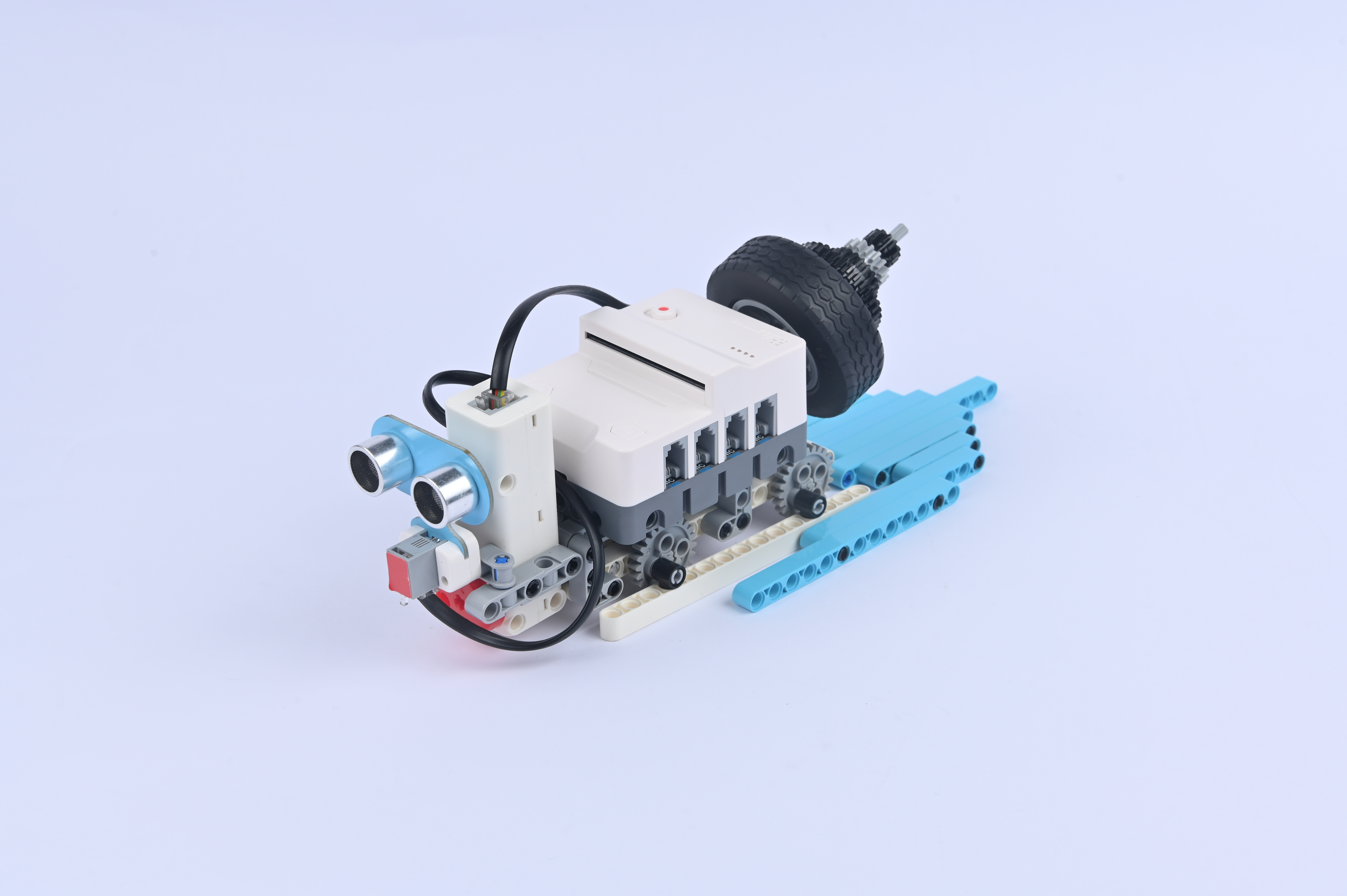
Ian and Jack discover shells and sand dunes on the beach after a storm. Jack enthusiastically proposes building a beach buggy that can avoid obstacles by itself — perfect for a friendly race with friends along the shoreline.
Teaching Objectives
  • Learn about beach buggies and their distinguishing features
  • Investigate various movement techniques for vehicles
  • Understand random number blocks and apply them correctly in programming
Sluice Gate
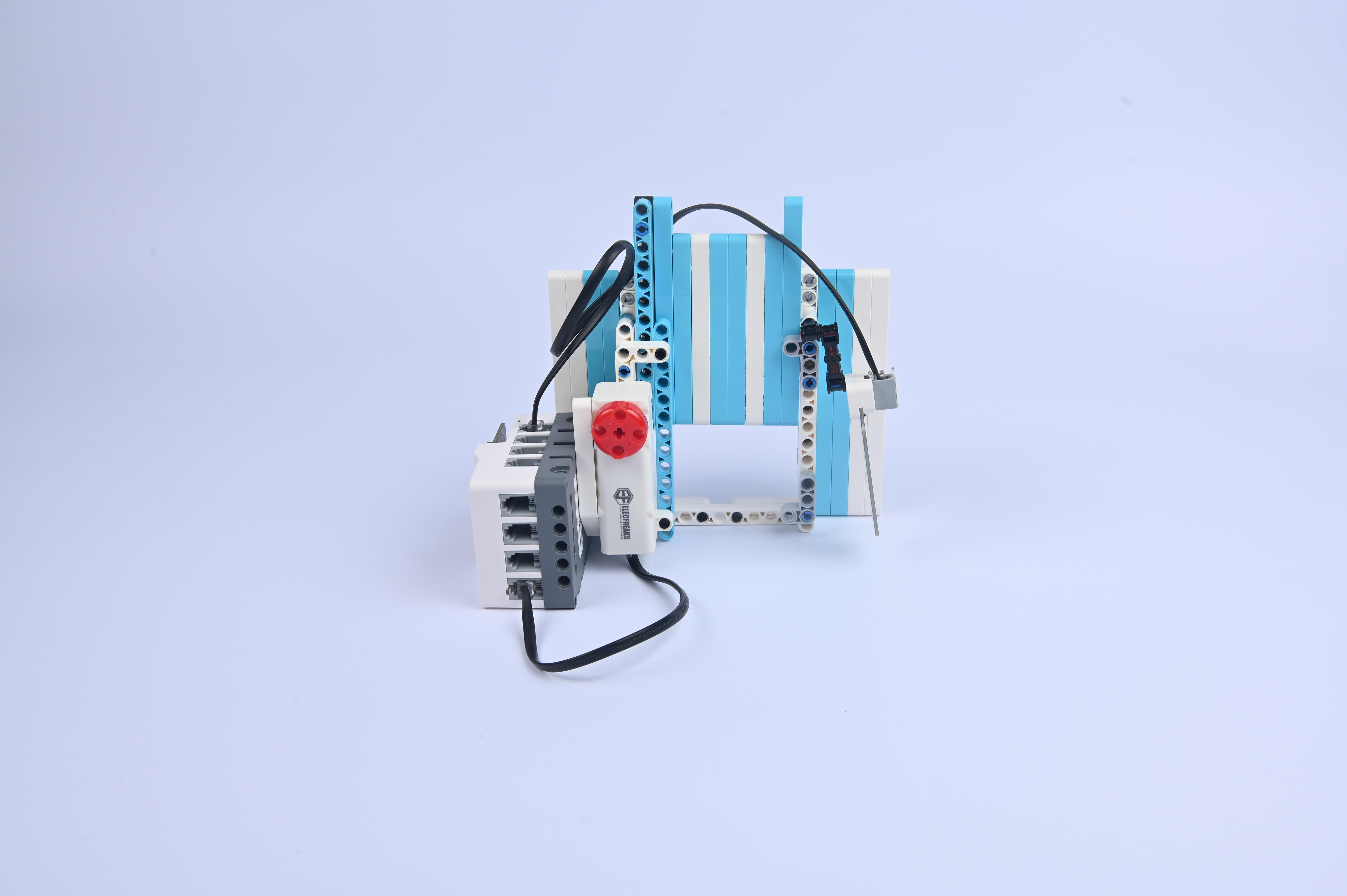
Case 16
Sluice Gate
Ian and Jack encounter workers discussing how continuous heavy rains are causing river water to rise sharply, requiring sluice gates to discharge water into the sea. During normal periods, gates must remain closed to protect the city's fresh water supply and prevent seawater intrusion.
Teaching Objectives
  • Understand sluice gates and their functions in water management
  • Design an intelligent sluice gate system according to task requirements

Full Specifications

Nezha Pro Ocean Kit (EF08436)
SKUEF08436
Age Suitability7+
Programming LanguagesMakeCode, Python
Compatible Boardmicro:bit V1 & V2
Electronic Modules13 total
ABS Building Blocks500+ pieces
Number of Cases16 ocean projects
Packaging Dimensions370 × 288 × 195 mm
Motor InterfaceRJ11 (color-coded)
Sensor InterfaceRJ11 (color-coded)
Planet Series Intelligent Motor
No-load Speed125 rpm
Stall Torque≥ 29 N·cm
Operating Angle360° × N (continuous)
Voltage Range5.0 – 9.0 V
ConnectorRJ11
Speed ReadingSupported
Angle ReadingSupported
Temperature ProtectionSupported
Stall ProtectionSupported
Voltage ProtectionSupported
Color RecognitionSupported
Weight31 g

Skills Students Develop

💻
Computational Thinking
Sequencing, loops, variables, conditions, and events using micro:bit's MakeCode and Python environments — from block coding to text-based programming.
⚙️
Mechanical Engineering
Gears, worm drives, ratchets, linkages, and structural design through hands-on ocean-themed building challenges that mirror real engineering.
🌊
Marine Science
Ocean ecology, tidal energy, marine biodiversity, aquaculture, and conservation — grounded in authentic science and environmental stewardship values.
🤝
Design Thinking
Collaborative problem solving, prototype iteration, and peer review processes that mirror how professional engineers and environmental scientists work.

Ready to Dive into Ocean Exploration?

Contact us for pricing, curriculum alignment guides, and professional development support.