🏢 Smart City Series

micro:bit
Smart City Kit

Build sustainable smart cities for the next generation. Hands-on IoT projects covering transportation, environment, safety, and urban life.

🏢 12 Real-World City Cases 🔌 10+ Components 💻 MakeCode / Python / JS ✅ CE / RoHS Certified
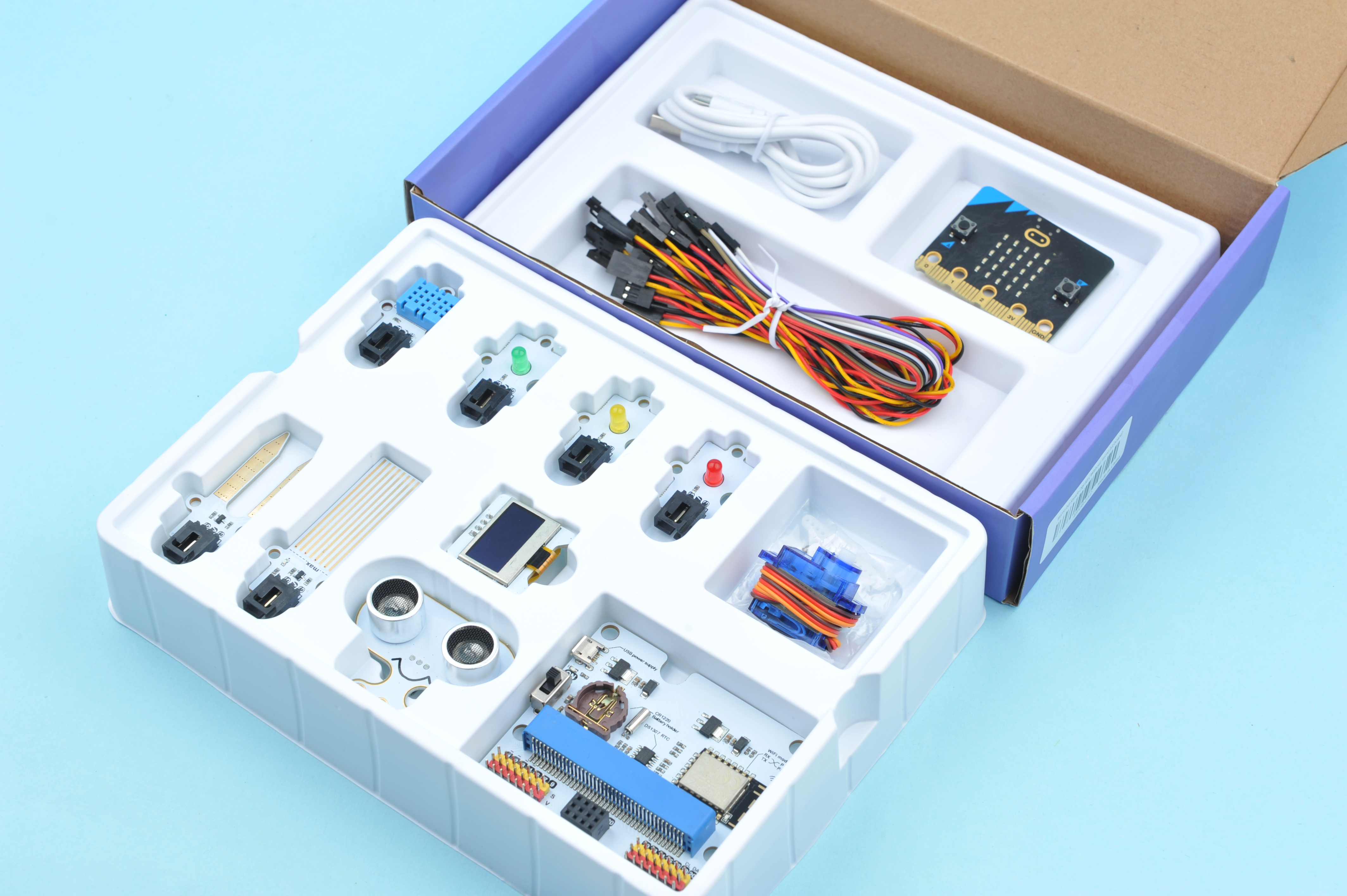
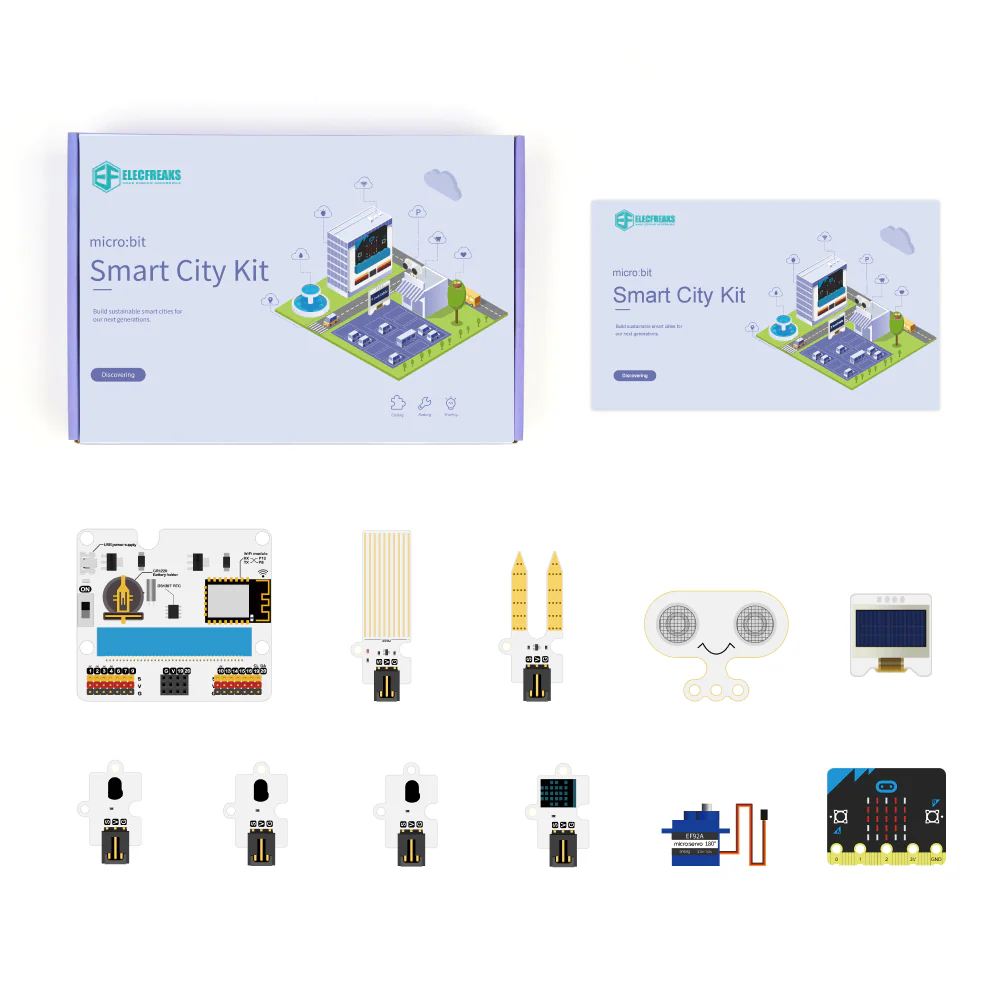
micro:bit Smart City Kit — full component spread

Introduction

The micro:bit Smart City Kit provides a carefully selected set of IoT components — including the IoT:bit board, DHT11 sensor, soil moisture sensor, water level sensor, Sonar:bit, servos, and more — enabling students to construct authentic smart city IoT projects.

From smart parking and transportation networks to environmental river monitoring, learners explore how connected technology solves real urban challenges. Each project is grounded in genuine city scenarios, giving students the context and motivation to apply programming, sensing, and automation skills.

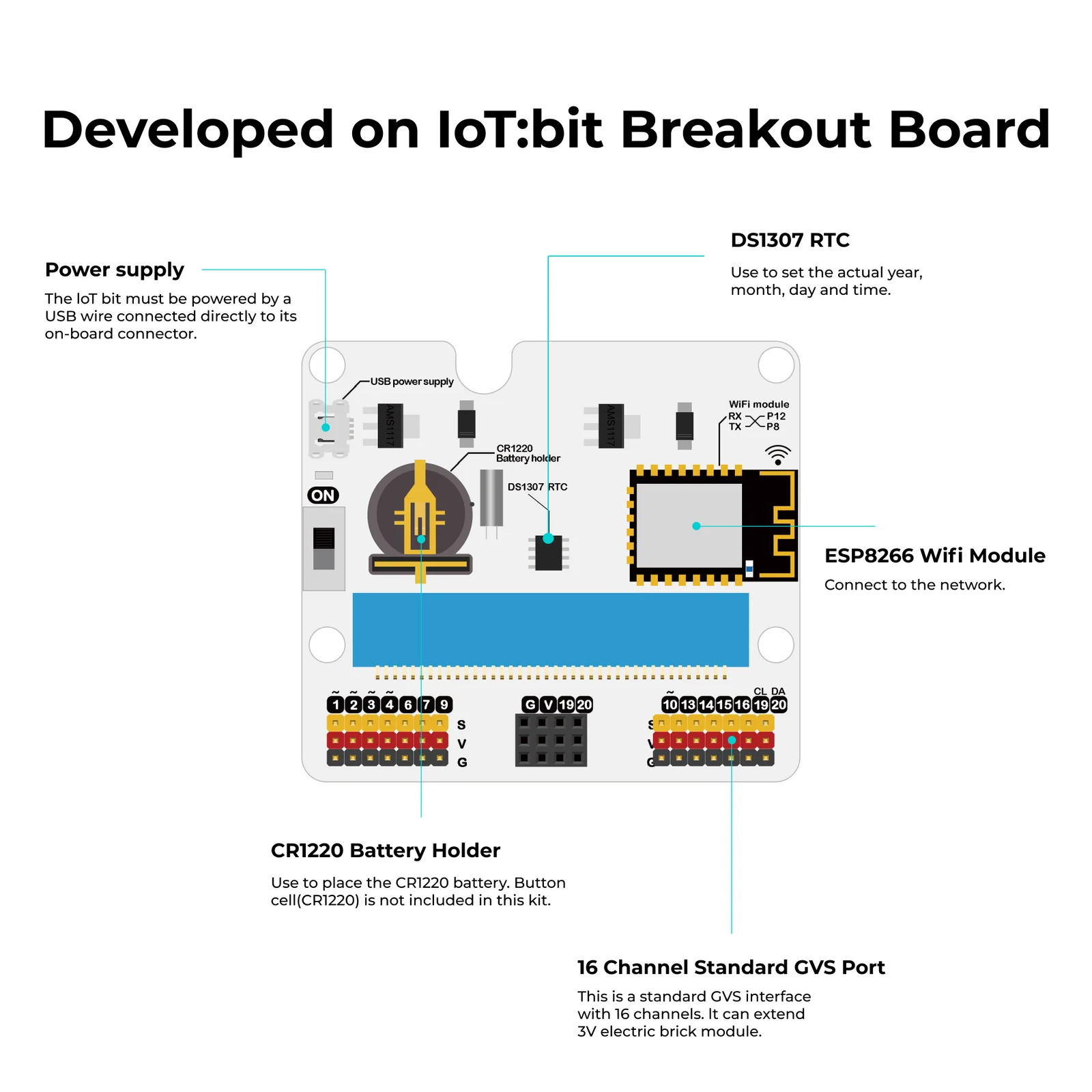
Built around the IoT:bit breakout board, it features an ESP8266 Wi-Fi module for cloud connectivity, DS1307 RTC for timestamping, a 16-channel GVS port, and on-board buzzer — giving students professional-grade hardware in a beginner-friendly format.

Compatible with MakeCode, Python, and JavaScript, and fully certified CE/RoHS for classroom use.
Smart City Kit features overview Developed on IoT:bit breakout board

Components List

Everything included out of the box — no extra purchases required to start building real smart city projects.

Smart City Kit — full components spread
Smart City Kit unboxed contents
ComponentQty
micro:bit×1
IoT:bit Board×1
OLED Screen×1
LED — Red×1
LED — Yellow×1
LED — Green×1
DHT11 Sensor (Temp & Humidity)×1
Water Level Sensor×1
Soil Moisture Sensor×1
Sonar:bit (Ultrasonic Distance)×1
180° Servo×1
USB Cable×1
Manual / Guidebook×1

12 Real-World Smart City Cases

Each case places students in the role of a city engineer solving a genuine urban challenge — from flood prevention and automated irrigation to noise monitoring and burglar alarms.

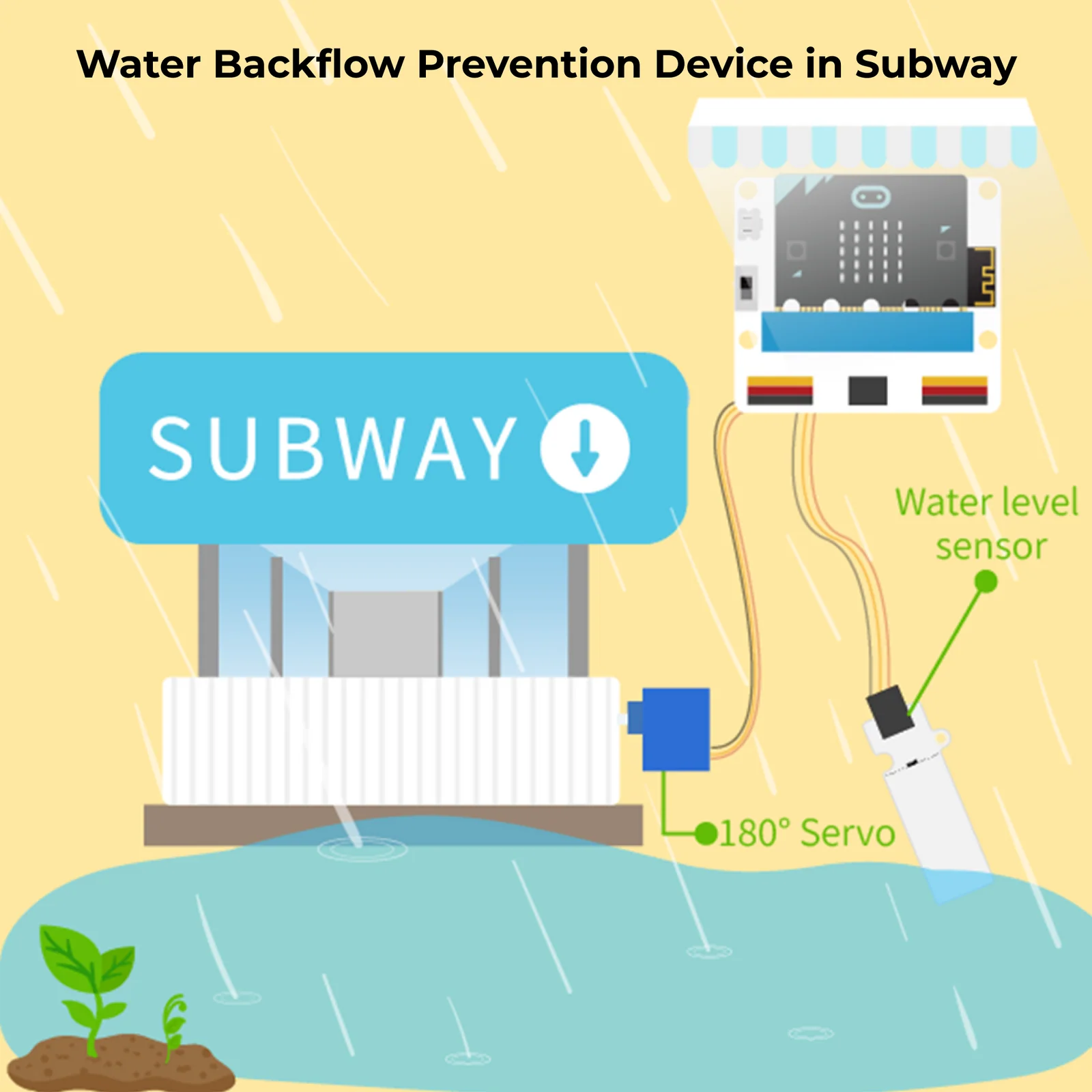
Water Backflow Prevention Device in Subway
🚢
Case 01
Water Backflow Prevention Device in Subway
Introduction
Subways are constructed underground, making them vulnerable to rainwater intrusion during heavy storms. Water accumulation can trap people, damage equipment, and disrupt operations. A water backflow prevention device automatically raises a waterproof baffle when water levels exceed a safe threshold.
Function
Detect the water level at the subway entrance with the water level sensor; if the value exceeds the threshold, automatically lift the barrier to block rainwater backflow.
Auto Irrigation System
🌿
Case 02
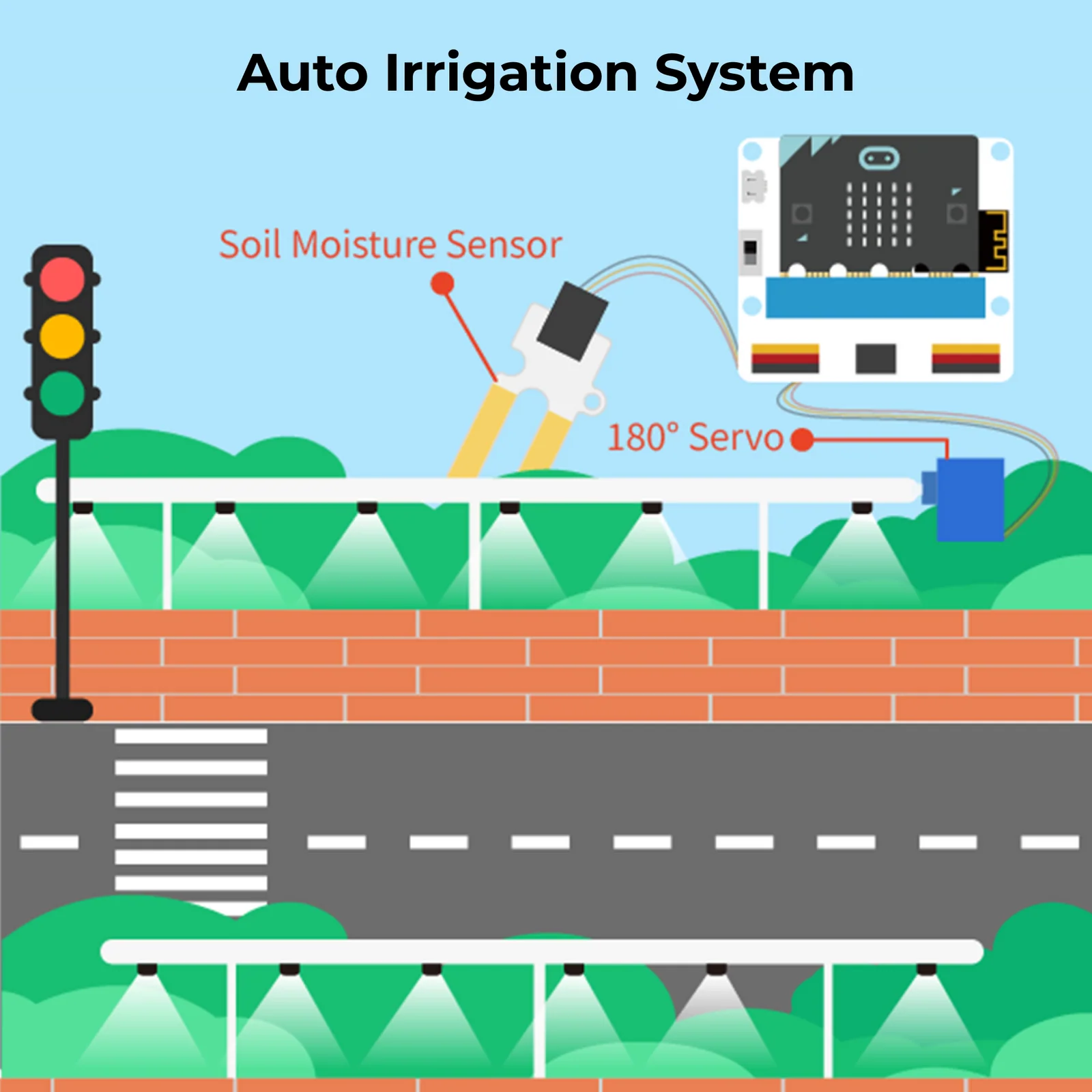
Auto Irrigation System
Introduction
Urban landscapes play an important role in city development, but manual irrigation is water-intensive and labour-heavy. An automated irrigation system can detect soil conditions and water plants only when needed — saving both water resources and workforce.
Function
Detect the soil moisture value using the soil moisture sensor and display it on the OLED screen. If the value falls below the set threshold, water the plants automatically.
Smart Trash Can
Case 03
Smart Trash Can
Introduction
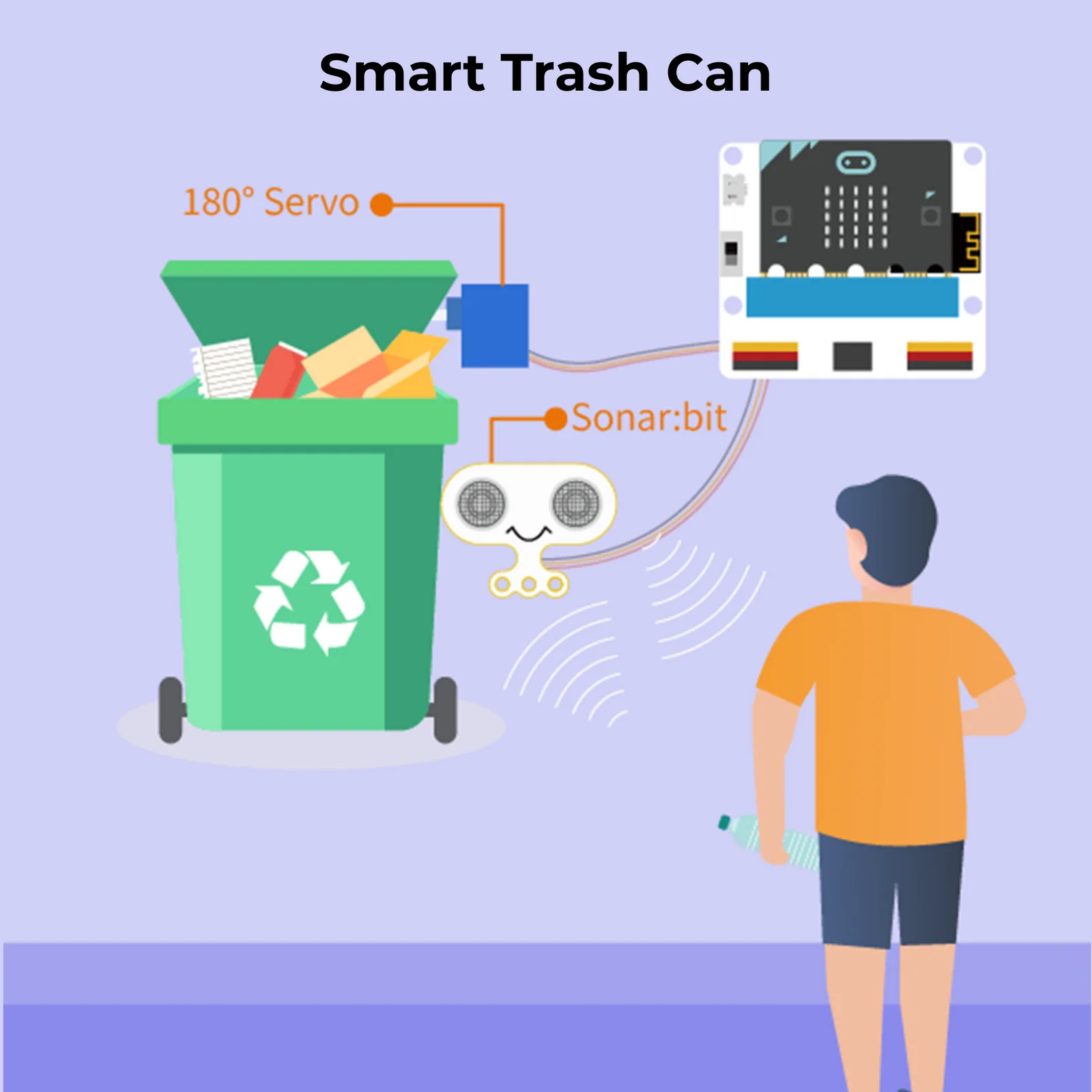
Most roadside trash cans lack lids or require manual opening, creating hygiene concerns in public spaces. A smart trash can solves this by opening automatically when someone approaches and closing once they move away — promoting cleanliness without contact.
Function
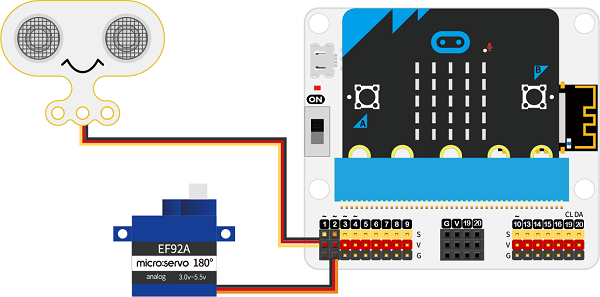
Use the Sonar:bit to detect human presence. When someone approaches, the servo automatically opens the lid. The lid closes when the person moves away.
The Birds Nest
🐦
Case 04
The Bird's Nest
Introduction
Human activities have greatly altered bird habitats in cities, making it difficult for birds to find places to rest and feed. Creating city bird nests helps restore wildlife-friendly spaces in urban environments and raises awareness about protecting urban biodiversity.
Function
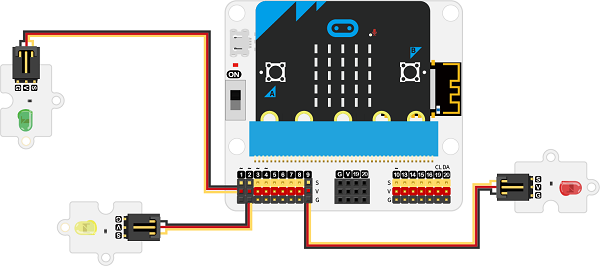
Control LED colours based on the tilt status of the micro:bit to remind and alert people about protecting the bird's nest.
Temp & Moisture Detection in the Library
📚
Case 05
Temp. & Moisture Detection in the Library
Introduction
Libraries require stable temperature (14°C–24°C) and humidity (45%–60%) to protect books from damage. High humidity encourages mould and insects; low humidity makes paper brittle. An environmental monitoring station keeps collections safe and reading conditions comfortable.
Function
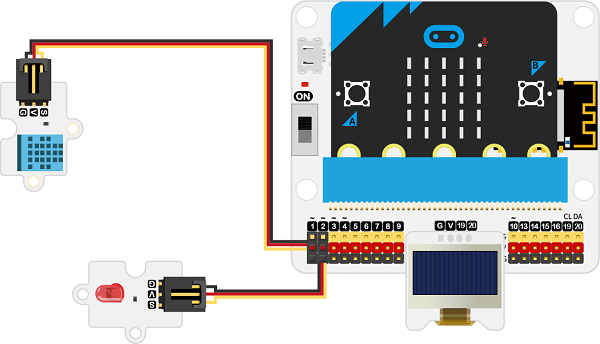
Read temperature and humidity from the DHT11 sensor and display values on the OLED screen. If either value falls outside the safe range, light the appropriate LED colour as a warning.
Auto Pets Feeder
🐾
Case 06
Auto Pets Feeder
Introduction
When travelling during holidays, leaving pets at home can be worrying. An automated pet feeder ensures animals are fed reliably without human presence — reducing stress for both owners and pets during extended absences.
Function
Use the Sonar:bit to detect pet presence in front of the feeder. When detected, automatically open the food lid to dispense food; close it when the pet moves away.
Auto Lamps
💡
Case 07
Auto Lamps
Introduction
Automatic street lamps can turn on at dusk and switch off at dawn — saving energy compared to manual or timer-based systems. Light-sensing automation ensures lamps respond accurately to real ambient conditions throughout the year.
Function
Detect ambient light level using the micro:bit's built-in light sensor. If the light level is too low, automatically turn on the lamps; turn them off when daylight returns.
Auto Drinking Device
💧
Case 08
Auto Drinking Device
Introduction
Public water dispensers on roadsides often require manual switch operation. An automated dispenser can detect a person approaching and release water without any physical contact — improving hygiene and convenience in public spaces.
Function
Detect if someone is standing in front of the device using the Sonar:bit. If a person is detected, drive the servo to open the water valve automatically.
Noise Detection Device in the Library
🔊
Case 09
Noise Detection Device in the Library
Introduction
Noise is a significant issue in library management. Even noise well below 85 dB can disturb readers and reduce concentration. A noise detection device monitors current sound levels and provides real-time visual feedback to encourage a quiet environment.
Function
Detect the noise level using the micro:bit's sound sensor and display the value on the OLED screen. Light the LED in a corresponding colour to indicate whether the noise level is acceptable.
Push-button Crosswalk Traffic Lights
🚦
Case 10
Push-button Crosswalk Traffic Lights
Introduction
Traditional fixed-cycle traffic lights can hold cars at red when no pedestrians are crossing, wasting traffic capacity. Push-button crosswalk lights give pedestrians control — the green walk signal is triggered only when needed, improving overall traffic flow.
Function
When the pedestrian presses the button, activate an auto-timer sequence that switches the traffic lights to green for crossing, then returns to normal flow.
Smart Lamps for Basketball Courts
🏈
Case 11
Smart Lamps for Basketball Courts
Introduction
Outdoor basketball courts in cities often keep lights on all night regardless of use, wasting energy. A motion-responsive lighting system turns lights on when players are present and off when the court is empty — saving energy without compromising safety.
Function
Automatically turn on the court lights when motion is detected on the basketball court; turn them off when no activity is sensed.
The Burglar Alarm in Shops
🚨
Case 12
The Burglar Alarm in Shops
Introduction
Shop security is a key concern for urban retail. A burglar alarm device monitors for unauthorised entry and immediately triggers an alert — protecting merchandise and deterring break-ins with an automated, low-cost security solution.
Function
Use the micro:bit's compass to detect when a magnet separates from the device beyond a threshold. Trigger a buzzer alarm and activate the LED light to alert of a potential break-in.